

🌱 Planting Vegetable Starters in South Louisiana
Beginner‑Friendly Guide for a Thriving Spring Garden
Growing your own vegetables in South Louisiana is one of the most rewarding things you can do in the garden. Our long warm season, rich soils, and early spring temperatures make it easy for beginners and seasoned gardeners alike to get a strong harvest — especially when you start with vegetable starters instead of seeds.
Whether you’re planting a small backyard bed or filling raised planters, here’s everything you need to know to get your vegetable garden off to a healthy, productive start.
🥬 Why Choose Vegetable Starters Instead of Seeds?
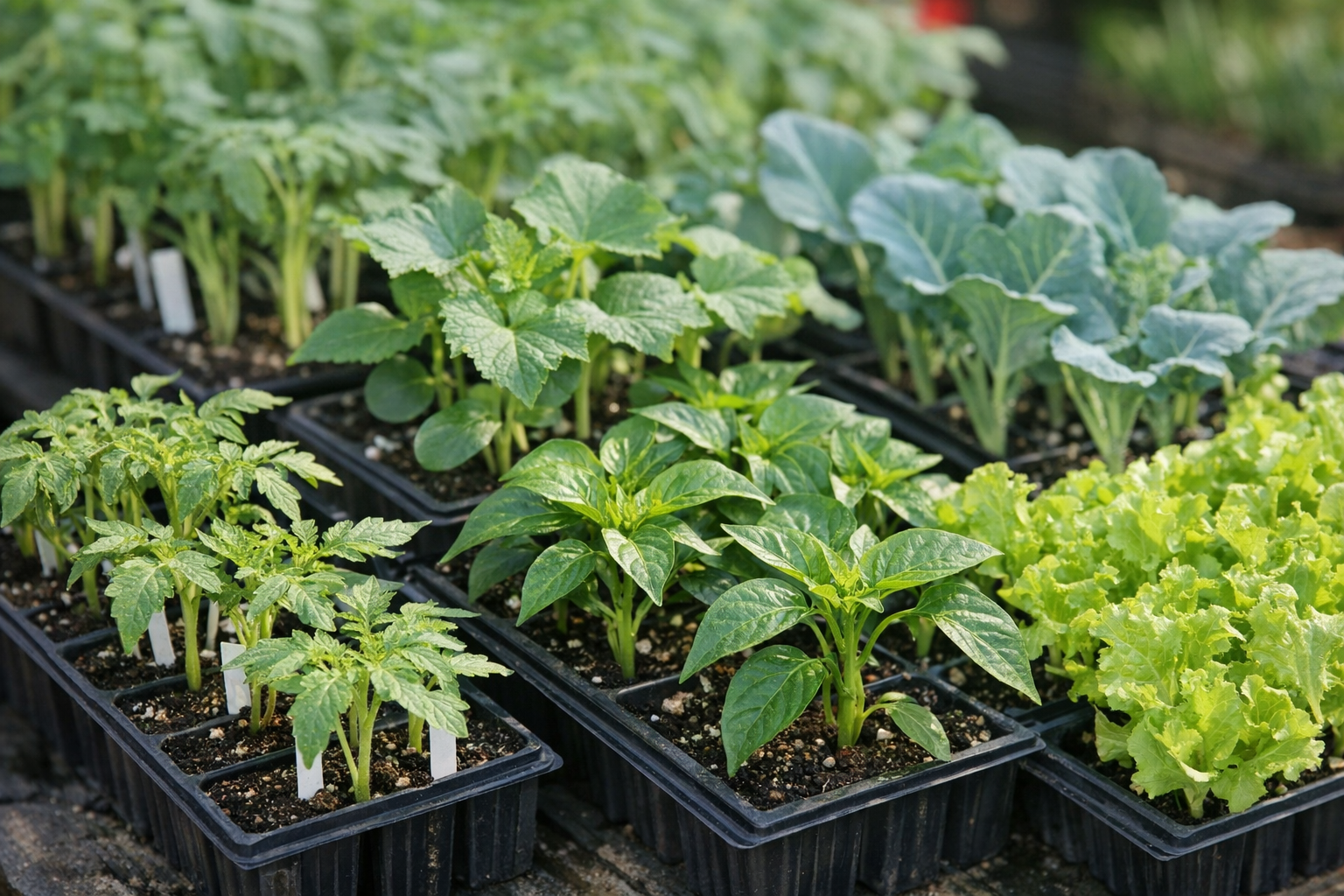
Vegetable starters (young plants already sprouted and growing) give you a major head start in our climate.
Benefits of starters:
- Faster harvests — no waiting on germination
- Stronger, more resilient plants
- Better success for beginners
- Easier spacing and planning
- Ideal for unpredictable early‑spring weather
For busy homeowners and first‑time gardeners, starters are the easiest way to get reliable results.
🌿 Best Vegetable Starters for South Louisiana
Our Zone 9 climate supports a wide variety of vegetables. These are the top performers for Lafayette and the surrounding Acadiana area:
Warm‑Season Favorites
- Tomatoes
- Bell peppers & hot peppers
- Cucumbers
- Squash & zucchini
- Eggplant
- Okra
- Basil & other herbs
Cool‑Season (Early Spring) Options
- Lettuce
- Cabbage
- Broccoli
- Cauliflower
- Kale
- Swiss chard
If you’re planting in March or early April, you can mix both cool‑season and warm‑season starters for a staggered harvest.
🌞 Choosing the Right Spot
Vegetables need full sun — at least 6–8 hours of direct sunlight daily.
Look for:
- Open areas away from trees
- Good drainage
- Easy access to water
- Soil that isn’t compacted
If your yard stays wet after rain, consider raised beds.
🧑🌾 How to Plant Vegetable Starters (Step‑by‑Step)
1. Prep the Soil
Healthy soil = healthy vegetables.
Mix in:
- Compost
- A balanced vegetable fertilizer
- Soil conditioner if your beds are heavy clay
2. Space Your Plants
Starter pots make spacing simple:
- Tomatoes: 18–24 inches apart
- Peppers: 12–18 inches
- Squash & cucumbers: 24–36 inches
- Leafy greens: 8–12 inches
Crowding leads to disease, so give them room to breathe.
3. Plant at the Right Depth
- Keep the soil line even with the top of the starter pot
- Tomatoes are the exception — plant them deeper to encourage strong roots
4. Water Deeply
Right after planting, water thoroughly to settle the soil.
Then water:
- Every 1–2 days for the first week
- 2–3 times per week once established
5. Mulch to Protect Roots
A 2–3-inch layer of mulch helps:
- Hold moisture
- Reduce weeds
- Keep soil temperatures stable
🐛 Common Problems (and Easy Fixes)
Yellow leaves
Often caused by overwatering or poor drainage.
Holes in leaves
Caterpillars or beetles — treat with organic options like neem oil or BT.
Plants not producing
Usually a sunlight issue. Move containers or trim nearby shrubs.
🌾 When to Harvest
Most vegetable starters begin producing within:
- 30–45 days for squash, cucumbers, and greens
- 60–90 days for tomatoes and peppers
Harvest early and often to encourage more growth.
🌼 Visit Beau Monde Nursery for Healthy Vegetable Starters
If you want strong, locally grown vegetable starters that thrive in South Louisiana’s heat and humidity, stop by our nursery in Scott. We carry:
- Tomatoes, peppers, cucumbers, squash, herbs, and more
- Soil, compost, fertilizer, and mulch
- Expert guidance on what grows best in Lafayette
We’ll help you choose the right plants and set your garden up for success.