

🌴 Why House Palms Are Heavy Feeders in Spring & Summer
Feed smarter, not harder — how Osmocote and fish emulsion keep palms lush through Louisiana’s heat.

House palms are some of the most popular indoor plants in South Louisiana, but they’re also some of the most misunderstood. As soon as spring arrives, palms shift into rapid growth mode and quickly burn through the nutrients in their soil — which is why so many homeowners start seeing yellowing fronds, weak stems, and slow growth. The solution is simple: a consistent feeding routine using Osmocote slow‑release fertilizer paired with fish emulsion gives palms exactly what they need to stay green, full, and thriving through our long, hot Louisiana summers. In this guide, we’ll break down why palms are heavy feeders, how to fertilize them properly, and the signs your palm is asking for help.
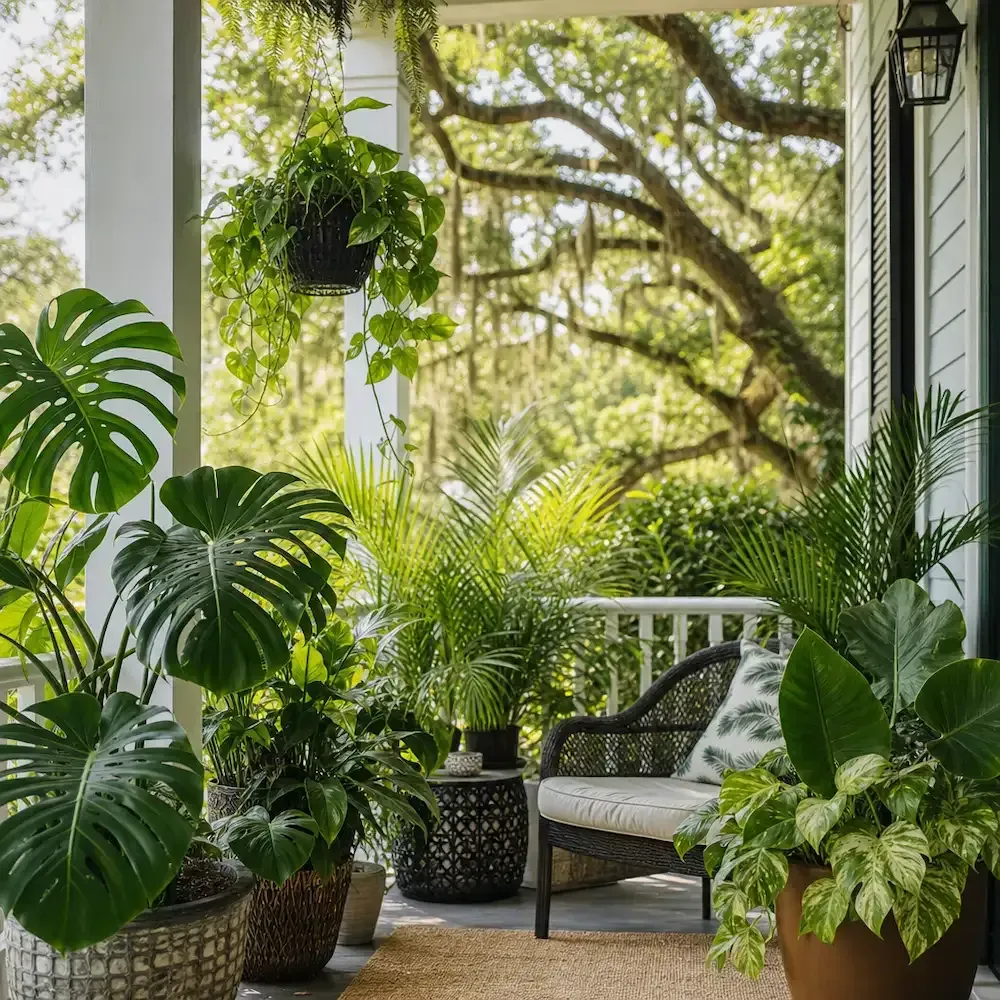
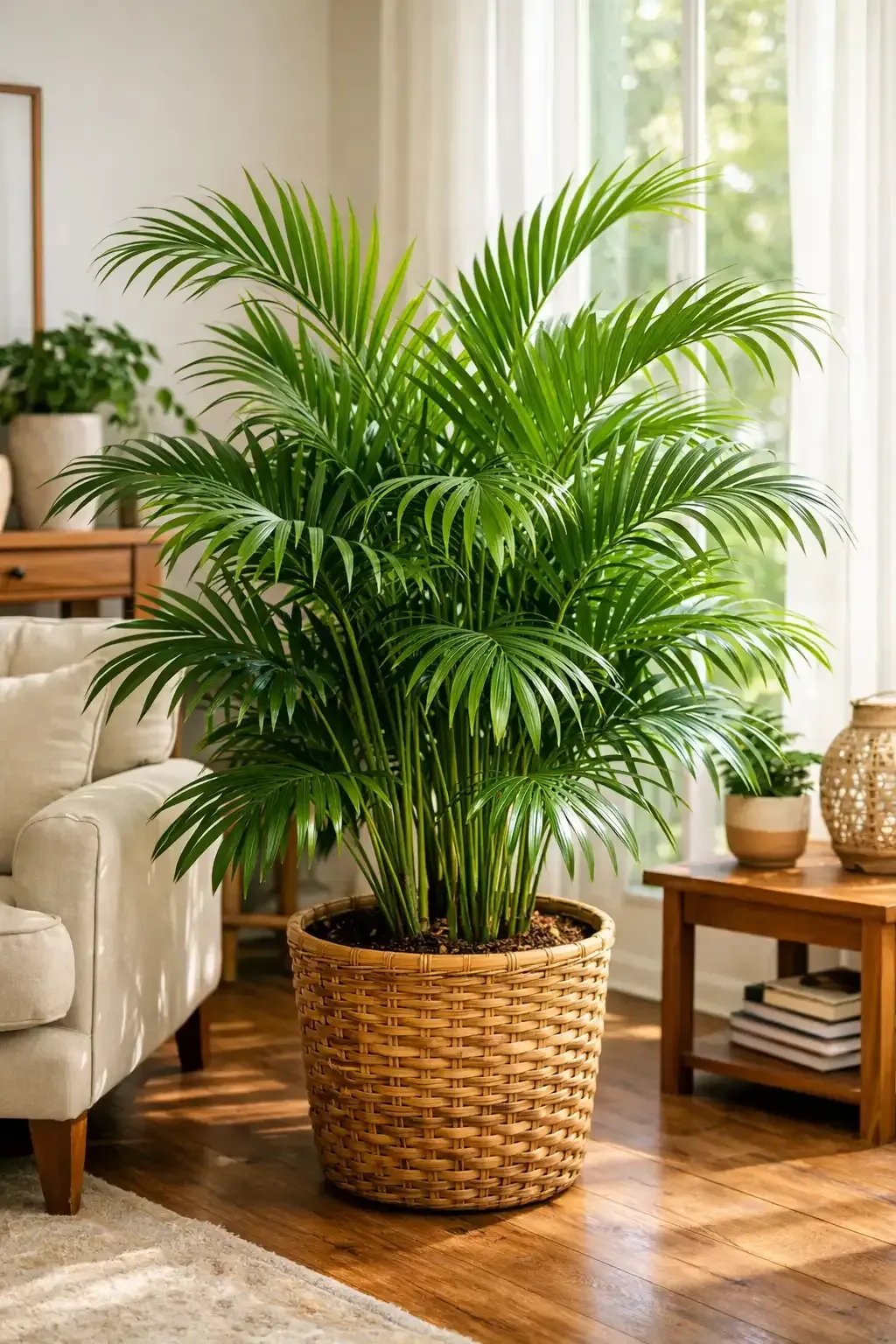
House palms — like Majesty, Areca, and Kentia — shift into high gear once warm weather arrives. During spring and summer, they push new fronds, strengthen roots, and demand more nutrients than most indoor plants. That’s why they’re considered heavy feeders — they need consistent nutrition to stay lush and green.
🌿 House Palms Wake Up When the Weather Warms Up
Once spring hits South Louisiana, house palms like Majesty, Areca, Parlor, and Kentia shift into active growth. They begin pushing new fronds, strengthening roots, and using nutrients at a much faster rate than they do in fall and winter.
Palms are naturally heavy feeders because they:
- Have fibrous root systems that don’t store nutrients well
- Grow continuously through warm months
- Lose nutrients quickly in containers due to watering and heat
- Require micronutrients (like magnesium & iron) to keep fronds green
This is why feeding correctly in spring and summer makes the difference between a palm that thrives — and one that struggles.
💧 Feed Fish Emulsion on Top of Osmocote
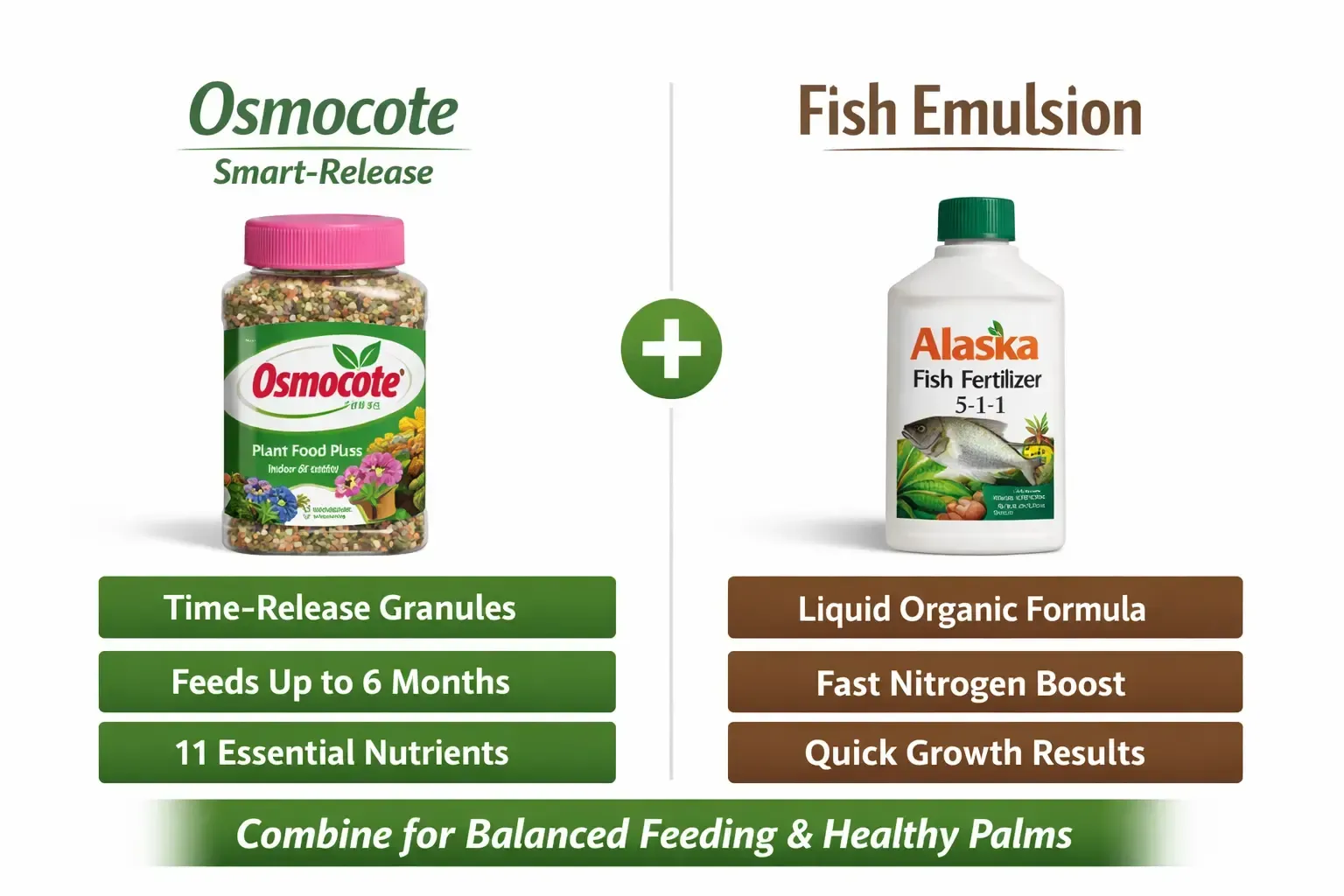
Using both fertilizers together gives palms the perfect balance of slow, steady feeding and quick, immediate nutrition.
Osmocote Smart‑Release Plant Food Plus
- Time‑release coated granules
- Feeds up to 6 months
- Provides 11 essential nutrients
- Great for baseline, long-term feeding
Fish Emulsion (Alaska 5‑1‑1 or similar)
- Organic liquid fertilizer
- Fast nitrogen boost
- Immediate color and growth response
- Gentle and safe for frequent use
Why combine them:
Osmocote releases slowly over time, while fish emulsion gives an instant push. Together, they prevent yellowing, strengthen new fronds, and keep palms deep green all summer.
🪴 How to Apply Fertilizer to House Palms
1. Start in Early Spring
Sprinkle Osmocote evenly across the soil surface.
Use about 3 tablespoons for a 2‑gallon pot.
2. Add Liquid Feeding Every 2–3 Weeks
Mix fish emulsion according to the label and water the palm thoroughly.
3. Keep Soil Moist
Nutrients move best through damp soil — avoid letting palms dry out completely.
4. Feed the Root Zone, Not the Trunk
Spread fertilizer around the pot, not directly against the stems.
🌞 Why It Matters
Underfed palms show yellowing, weak fronds, and slow growth. A balanced feeding routine keeps foliage deep green and fronds strong — especially in South Louisiana’s long growing season.
Healthy palms also resist stress from heat and humidity better, making them ideal for patios, sunrooms, and shaded landscapes.
🧠 Pro Tip
If your palm is in a container, use half the outdoor Osmocote rate and monitor salt buildup occasionally with a soil meter. Organic supplements like worm castings or bone meal can further enrich the mix
📅 Palm Feeding Schedule (South Louisiana – Zone 9)
March–April
✔ Start Osmocote
✔ First fish emulsion feeding
✔ Increase watering as temps rise
May–August
✔ Fish emulsion every 2–3 weeks
✔ Maintain consistent moisture
✔ Watch for rapid new fronds
September
✔ Reduce liquid feeding
✔ Keep Osmocote until temps cool
October–February
✔ Minimal feeding
✔ Palms rest during cooler months
This schedule keeps palms strong through our long, hot growing season.
🧪 Why Palms Need More Nutrients Than Other Houseplants
Palms are monocots with shallow, fibrous roots that constantly pull nutrients from the soil. Unlike plants with thick taproots, palms can’t store much food internally — so they rely on consistent external feeding.
Container palms lose nutrients even faster because:
- Watering flushes nutrients out
- Heat breaks down soil faster
- Potting mixes don’t hold micronutrients well
This is why palms respond dramatically when fed properly.
⚠️ Common Signs Your Palm Is Underfed
If you see any of these, your palm is hungry:
- Pale or yellow fronds
- Slow or stunted new growth
- Brown tips
- Smaller fronds than usual
- Weak, drooping stems
Quick fix:
Give a dose of fish emulsion immediately, then resume your regular feeding schedule.
🌞 Louisiana‑Specific Pro Tip
Our heavy rainfall, humidity, and frequent watering wash nutrients out of containers faster than in dry climates.
This makes Osmocote + fish emulsion the ideal combo for Acadiana growers — steady feeding with fast boosts when palms need it most.
🌿 FAQ: Feeding House Palms in Spring & Summer
Why are my house palm leaves turning yellow?
Yellowing fronds usually mean your palm isn’t getting enough nutrients. Palms are heavy feeders and quickly use up what’s in the soil. Feeding with Osmocote for slow release and fish emulsion for fast nitrogen usually restores green color within a few weeks.
How often should I fertilize my indoor palm?
During spring and summer, feed palms with fish emulsion every 2–3 weeks and refresh Osmocote every 3–4 months. In fall and winter, reduce feeding as palms naturally slow down.
Can I use Osmocote and fish emulsion at the same time?
Yes — and it’s actually the best method. Osmocote provides steady, long‑term nutrition, while fish emulsion gives a quick boost that supports new fronds and prevents yellowing.
What’s the best fertilizer for house palms?
A combination of Osmocote Smart‑Release Plant Food Plus and a liquid fish emulsion (like Alaska 5‑1‑1) gives palms the balanced nutrition they need for strong, green growth.
Do palms need more fertilizer in Louisiana?
Yes. Our heat, humidity, and frequent watering wash nutrients out of soil faster. That’s why palms in South Louisiana benefit from consistent feeding during the warm months.
How do I know if my palm is underfed?
Common signs include:
- Pale or yellow fronds
- Brown tips
- Slow or stunted growth
- Smaller new fronds
- Weak or drooping stems
If you see these, feed with fish emulsion immediately.
Should I fertilize palms in winter?
No — palms rest in cooler months. Light feeding is okay, but heavy fertilizing should wait until spring.
Can you help diagnose my palm problems?
Absolutely. Bring a photo of your palm to Beau Monde Nursery & Landscape or give us a call. We’ll help you figure out exactly what it needs — fertilizer, soil, watering adjustments, or repotting.
🌱 Final Takeaway
Healthy palms aren’t an accident — they’re fed consistently.
If you want deep green fronds, strong stems, and steady growth all summer, the winning formula is:
Osmocote for long-term feeding + fish emulsion for fast growth support.
📞 Need Help With Your Palms?
If your palm isn’t looking its best — yellowing fronds, slow growth, brown tips, or you’re just not sure what it needs — Beau Monde Nursery & Landscape is here to help.
Bring a photo of your plant or stop by the garden center, and we’ll point you in the right direction with the right fertilizer, soil, or care routine.
Healthy palms are easy when you’ve got the right guidance.
Call Beau Monde or visit us for expert help with all your indoor and outdoor palms.