

Are Native Plants Perennials? Discover Louisiana’s Long‑Lasting Landscape Favorites
Are All Native Plants Perennials?
Not all native plants are perennials — but most of the ones used in Louisiana landscaping are. Native plants simply refer to species that naturally occur in our region. Some of those are annuals, some are biennials, and many are long‑lived perennials.
In South Louisiana (Zone 9), the majority of popular native shrubs, grasses, and wildflowers behave as true perennials because they’re adapted to our heat, humidity, rainfall, and soil. Even if they die back in winter, their root systems remain alive and return stronger each spring.
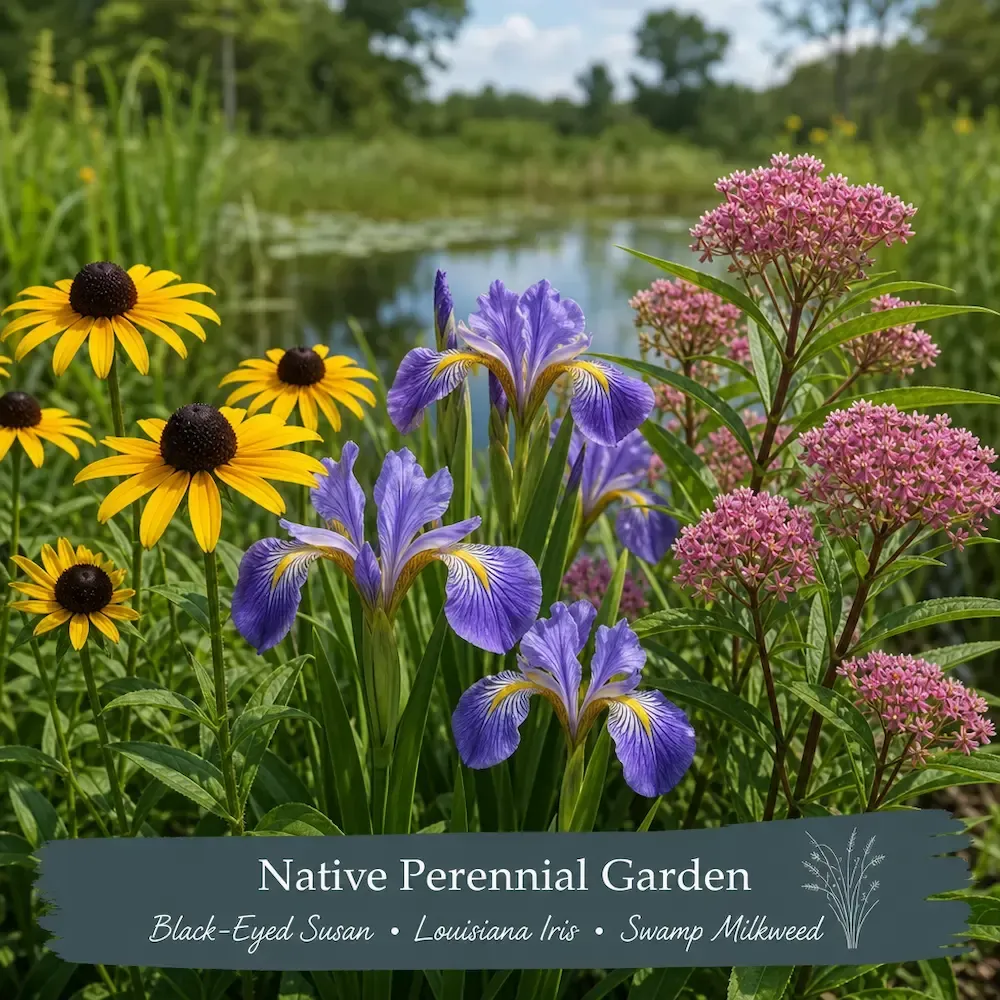
Annual natives like partridge pea or blanketflower complete their life cycle in one season, while biennials like some native thistles take two years. But the plants homeowners ask for most — Louisiana iris, swamp milkweed, black‑eyed Susan, coneflower, muhly grass, — are all reliable perennials that come back year after year with very little maintenance.
| 🌿 Native Perennials 19 plants | 🌿 Native Annuals/Biennials 7 plants | 🌿 Non-Native Perennials 13 plants |
|---|---|---|
| Louisiana Iris | Partridge Pea | Lantana |
| Purple Coneflower | Blanketflower | Daylilies |
| Black-Eyed Susan | Plains Coreopsis | Society Garlic |
| Swamp Milkweed | Firewheel | Agapanthus |
| Blue Mistflower | Tickseed Sunflower | Mexican Petunia |
| Cardinal Flower | Native Thistles | Canna Lily |
| Indian Pink | Evening Primrose | Blue Salvia |
| Stokes' Aster | Gaura | |
| Coreopsis | Azaleas | |
| Scarlet Sage | Camellias | |
| Gulf Muhly Grass | Gardenia | |
| Switchgrass | Loropetalum | |
| Little Bluestem | Boxwood | |
| Inland Sea Oats | ||
| Yaupon Holly | ||
| Oakleaf Hydrangea | ||
| Wax Myrtle | ||
| Virginia Sweetspire | ||
| Buttonbush |
Benefits of Choosing Native Perennials for Your Landscape
Native perennials offer advantages that non‑native plants simply can’t match — especially in South Louisiana’s heat, humidity, and unpredictable weather. Because they evolved in our region, they’re naturally equipped to thrive with less maintenance and fewer resources.
1. Lower Water Requirements
Native perennials are adapted to our rainfall patterns and soil types, which means they need far less supplemental watering once established. This makes them ideal for homeowners who want a beautiful landscape without high water bills or constant irrigation.
2. Better Pest & Disease Resistance
Because they’ve coexisted with local insects and environmental pressures for centuries, native perennials are naturally resistant to many of the pests and diseases that affect non‑native plants. That means fewer chemicals, fewer treatments, and healthier garden beds.
3. Strong Support for Pollinators & Wildlife
Native perennials provide nectar, pollen, seeds, and habitat for Louisiana’s butterflies, bees, hummingbirds, and beneficial insects. Plants like swamp milkweed, coneflower, and blue mistflower play a crucial role in supporting local ecosystems — something non‑native plants can’t replicate.
4. Long‑Term Reliability in Louisiana’s Climate
From scorching summers to heavy rains, native perennials bounce back year after year. Their deep, established root systems help them survive drought, flooding, and temperature swings far better than many imported species.
5. Lower Maintenance Overall
Native perennials typically require:
- Less watering
- Less fertilizer
- Less pruning
- Less pest control
This makes them a smart choice for busy homeowners and commercial properties looking for long‑lasting beauty with minimal upkeep.
6. Natural, Authentic Louisiana Aesthetic
Native perennials blend seamlessly into Acadiana landscapes. They look like they belong here — because they do. Their textures, colors, and growth habits create a landscape that feels natural, timeless, and rooted in place.
Do Native Perennials Die Back in Winter?
Some native perennials do die back in winter — but that doesn’t mean they’re gone. In South Louisiana’s Zone 9 climate, many herbaceous native perennials will go dormant above ground while their root systems stay very much alive below the soil. When spring warmth returns, they push out fresh new growth and come back stronger each year.
Here’s how it typically works:
Herbaceous Native Perennials
Plants like Black‑Eyed Susan, Purple Coneflower, Swamp Milkweed, and Blue Mistflower often brown out or disappear completely in late fall. This is normal. Their energy shifts to the roots, allowing them to survive cold snaps and return reliably in spring.
Evergreen & Semi‑Evergreen Native Shrubs
Shrubs such as Yaupon Holly, Oakleaf Hydrangea, Wax Myrtle, and Dwarf Palmetto keep their structure year‑round. Some may thin slightly in winter, but they don’t “die back” the way wildflowers and grasses do.
Native Grasses
Grasses like Gulf Muhly and Switchgrass turn tan or straw‑colored in winter, but their root systems remain active. A simple cutback in late winter keeps them tidy and encourages fresh spring growth.
Why This Die‑Back Is a Good Thing
Dormancy helps native perennials:
- Conserve energy
- Survive temperature swings
- Prepare for vigorous spring growth
- Support wildlife (seed heads feed birds, stems shelter insects)
In short:
Yes, many native perennials die back in winter — but they’re built to return beautifully every spring in Louisiana’s climate.
🌿 Top Native Perennials That Deserve the Spotlight
Blue Mistflower (Conoclinium coelestinum)
Explosive late‑season pollinator magnet
A powerhouse native with aggressive spreading, cloud‑blue blooms, and unmatched appeal to butterflies. It thrives in Louisiana heat, fills empty spaces fast, and delivers a massive nectar flush when most plants are fading. Can spread quickly, so give it room or use it intentionally.
- Light: Full sun to part shade
- Evergreen: No
- Maintenance: Low
Gulf Muhly Grass (Muhlenbergia capillaris)
Iconic pink fall plumes
One of the most striking native grasses, known for its cotton‑candy pink blooms in fall. It forms tidy clumps, handles drought, and adds movement and texture to any landscape. A reliable performer in Zone 9 with very low maintenance needs.
- Light: Full sun
- Evergreen: Semi‑evergreen
- Maintenance: Very low
Purple Coneflower (Echinacea purpurea)
Reliable, long‑blooming classic
A tough, adaptable perennial with long-lasting blooms, strong pollinator value, and steady reseeding. It handles heat, humidity, and poor soil while still looking refined in residential beds. Great for beginners and seasoned gardeners alike.
- Light: Full sun
- Evergreen: No
- Maintenance: Low
🌿 Native Plants That Multiply
Perennials (Spread, Clump, or Reseed)
- Black‑Eyed Susan
- Blue Mistflower
- Swamp Milkweed
- Butterfly Milkweed
- Purple Coneflower
- Obedient Plant
- Seashore Mallow
- Cardinal Flower
- Blue‑Eyed Grass
- Goldenrod (Solidago spp.)
- Coreopsis (lanceolata & tinctoria)
- Spiderwort
- Gulf Muhly Grass
Shrubs That Multiply (Only True Spreaders)
- Dwarf Palmetto
- American Beautyberry
- Buttonbush
Groundcovers / Vines / Trees That Spread
- Frogfruit
- Virginia Creeper
- Woodland Phlox
- Sweetbay Magnolia (multi‑stem clumping habit)
- River Birch (multi‑stem tendency)
🌿 Top 3 Native Plants for Shade (South Louisiana)
1. Oakleaf Hydrangea (Hydrangea quercifolia)**
A true Louisiana native shrub that thrives in partial shade to full shade.
Why it’s a winner:
- Huge white flower clusters that age to pink
- Stunning fall color (rare for our climate)
- Peels bark for winter interest
- Low maintenance once established
It gives that “high‑end landscape” look without needing sun.
2. Louisiana Iris (Iris giganticaerulea and relatives)**
Perfect for shade, dappled light, and wet areas.
Why it’s a winner:
- Comes back bigger every year
- Multiplies beautifully
- Handles wet soil, clay, and low spots
- Blooms in bold purples, blues, yellows, and whites
One of the most iconic natives in the state.
3. Dwarf Palmetto (Sabal minor)**
A bulletproof native that thrives in deep shade, even under live oaks.
Why it’s a winner:
- Evergreen structure year‑round
- Zero maintenance
- Drought‑tolerant AND flood‑tolerant
- Creates a lush, tropical look naturally
It’s one of the few natives that gives you that “tropical shade garden” vibe without the fuss.
☀️ Top 3 Native Plants for Full Sun (South Louisiana)
1. Purple Coneflower (Echinacea purpurea)**
A powerhouse perennial that loves full, blazing sun.
Why it’s a standout:
- Long bloom season
- Attracts butterflies, bees, and goldfinches
- Handles drought once established
- Comes back bigger every year
It gives that “pollinator garden” look customers love without needing constant care.
2. Black‑Eyed Susan (Rudbeckia hirta/fulgida)**
One of the toughest, most reliable natives for full sun and poor soil.
Why it’s a winner:
- Blooms for months
- Multiplies easily
- Heat‑tolerant and humidity‑proof
- Great for mass plantings
Perfect for filling large beds with color fast.
3. Gulf Muhly Grass (Muhlenbergia capillaris)**
A native ornamental grass that thrives in full sun and dry conditions.
Why it’s a favorite:
- Pink fall plumes that stop traffic
- Zero maintenance
- Drought‑tolerant
- Adds movement and texture
It’s one of the best natives for giving a landscape that polished, modern look.
🌴 Top 3 Natives That Look Tropical but Love Full Sun
1. Seashore Mallow (Kosteletzkya pentacarpos)**
This one fools people every time — it looks like a hibiscus, acts like a hibiscus, but it’s a true Louisiana native.
Why it feels tropical:
- Big, showy pink blooms
- Upright, lush growth habit
- Loves heat, humidity, and wet soil
- Blooms all summer
It gives instant “coastal tropical” energy.
2. Dwarf Palmetto (Sabal minor) **
A native palm that handles full sun, drought, flooding, and freezes — basically indestructible.
Why it feels tropical:
- Fan‑shaped palm leaves
- Evergreen structure
- Works as a specimen or mass planting
- Zero maintenance
It’s the easiest way to add a palm look without the risk.
3. Gulf Muhly Grass (Muhlenbergia capillaris)**
Not a “tropical plant,” but it gives that soft, airy, ornamental‑grass look you see in high‑end tropical resorts.
Why it feels tropical:
- Pink plumes that glow in sunlight
- Movement + texture
- Loves full sun and poor soil
- Handles heat like a champ
It pairs beautifully with palms, hollies, and flowering perennials.
Azaleas: Native or Non‑Native in Louisiana?
Azaleas are indeed perennials, but it’s important to understand the difference between native and non‑native varieties. While a few deciduous azaleas are native to the South, the evergreen azaleas most commonly used in Louisiana landscapes are non‑native. In Zone 9 (Lafayette and surrounding areas), they perform beautifully when planted in well‑drained, acidic soil with partial shade.
Native vs. Non‑Native
- Non‑Native (Evergreen): Southern Indica azaleas—like Formosa and George Tabor—are the classic azaleas seen across the South. These were introduced from Asia in the 1800s and have become staples in traditional Southern gardens.
- Native (Deciduous): Louisiana does have true native azaleas, such as the Piedmont Azalea (Rhododendron canescens) and the Florida Flame Azalea (Rhododendron austrinum). These lose their leaves in winter and produce highly fragrant, honeysuckle‑like blooms in spring.
Growing Azaleas in Lafayette (Zone 9)
Because our summers are hot and humid, proper planting conditions are essential for long‑term success:
- Sun Exposure: Morning sun with afternoon shade prevents leaf scorch.
- Soil: Azaleas require acidic soil (pH 5.0–6.0). Many Lafayette soils need sulfur to lower the pH.
- Drainage: Heavy clay soils hold water, so raised beds or soil amendments (pine bark, sand) help prevent root rot.
- Watering: Keep soil consistently moist but never soggy.
Important: Louisiana’s native plant diversity is extensive, and this article highlights only a small selection. These examples are meant to illustrate how native perennials grow, spread, and adapt to our environment.
Understanding how native perennials function in Louisiana’s ecosystem helps homeowners make smarter, longer‑lasting landscape choices. These plants have spent thousands of years adapting to our soils, rainfall patterns, and seasonal temperature swings, which is why they return so reliably and require so little intervention. By choosing native perennials, you’re not just planting something pretty — you’re supporting pollinators, improving soil health, reducing water use, and creating a landscape that works with nature instead of against it. When gardeners understand the science behind why these plants thrive here, it becomes clear that native perennials aren’t just an option — they’re the foundation of a resilient, sustainable Louisiana landscape.
Contact Us