

🌹 Too Much Rain? How to Protect Your Roses from Fungus and Root Rot in South Louisiana
How to prevent black spot, fungus, and root rot in roses during Louisiana’s rainy season
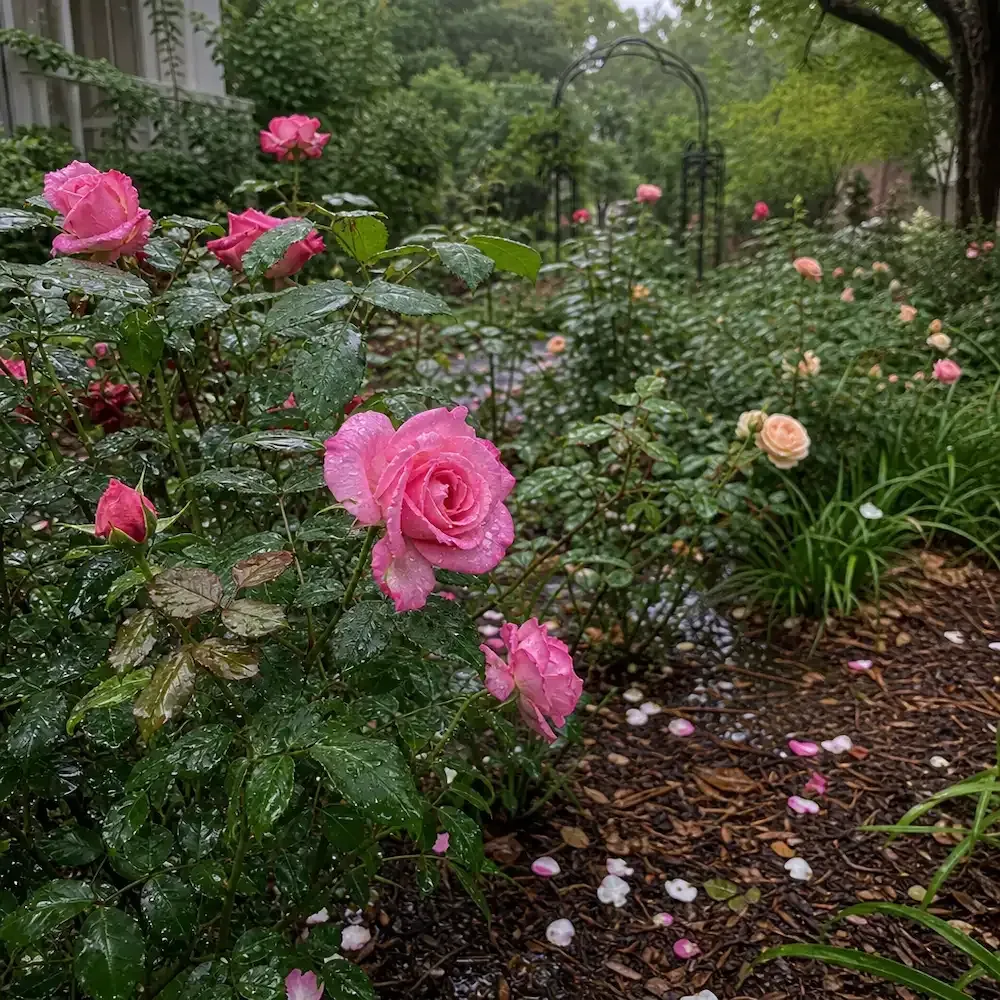
🌧️ When the Rain Won’t Quit
South Louisiana has been drenched lately, and while lawns may enjoy the extra moisture, roses definitely do not. Roses only need 1–2 inches of water per week, and anything beyond that can quickly lead to soggy roots, yellowing leaves, and fungal diseases like black spot. If your roses have been sitting in wet soil for days, here’s how to help them recover and stay healthy through Louisiana’s rainy season.
🌬️ 1. Let the Soil Dry Out
Roses hate “wet feet.”
If the soil feels wet more than a couple inches down, stop watering completely until it dries.
Too much moisture suffocates roots and encourages Phytophthora and Pythium root rot.
If water is pooling:
- Add soil to raise the planting area
- Re‑shape the bed so water drains away
- Make sure water disappears within 24 hours
➡️Our team provides professional lawn service to help homeowners protect their landscapes during heavy rain and high humidity.
🌿 2. Improve Airflow Around the Plant
Fungus thrives in warm, humid, still air — exactly what we get in Lafayette after long rain spells.
Improve airflow by:
- Removing crossing or crowded branches
- Opening the center of the plant
- Spacing roses 3–4 feet apart
- Keeping mulch off the canes
Better airflow = faster drying = less fungus.
🌱 3. Mulch Smart (But Not Too Much)
Mulch helps prevent soil splash, which is the #1 way black spot spreads.
But too much mulch traps moisture.
Ideal depth: 1.5–2 inches
Use pine bark mulch — it drains well and doesn’t mat down like cypress.
➡️For bigger solutions like drainage improvements or bed redesign, our team offers full landscape installation services throughout Lafayette and Acadiana.
🧪 4. Treat Fungus Early (Organic + Synthetic Options)
Organic Treatments
- Neem Oil – Mild fungicide + insect control; apply every 7–10 days.
- Copper Fungicide – Effective on black spot and downy mildew; OMRI‑listed.
- Wettable Sulfur – Great for powdery mildew; avoid when temps exceed 85°F.
- Baking Soda Spray – 1 tbsp baking soda + 1 tsp horticultural oil + 1 gal water.
Synthetic Treatments
- Chlorothalonil (Daconil) – Strong contact fungicide for black spot.
- Myclobutanil (Immunox) – Systemic; rainfast once dry.
- Mancozeb – Heavy‑duty contact fungicide for severe outbreaks.
- Propiconazole – Systemic; effective on black spot and rust.
Pro tip: Rotate fungicides every 2–3 weeks to prevent resistance.
🧹 5. Remove Diseased Leaves Immediately
Black spot spreads through spores on infected leaves.
Do this ASAP:
- Pick up fallen leaves
- Remove spotted leaves from the plant
- Bag them — never compost
- Avoid overhead watering
🌸 6. Feed Lightly After the Rain
Heavy rain washes nutrients out of the soil.
Once the soil dries:
- Apply a light rose fertilizer
- Add a pinch of Epsom salt for magnesium
- Avoid heavy feeding until roots recover
🪴 7. Improve Long‑Term Drainage
If your rose beds stay soggy after every storm, consider long‑term fixes:
- Raise the bed
- Add expanded shale or pine bark fines
- Install a French drain
- Re‑grade low spots
Good drainage is the #1 defense against root rot in Zone 9.
🌧️ FAQ: Caring for Roses During Heavy Rain in South Louisiana
How much water do roses really need each week?
Roses only need 1–2 inches of water per week in South Louisiana. During long rainy periods, stop watering completely and let the soil dry before irrigating again.
Why are my rose leaves turning yellow after all this rain?
Yellow leaves usually mean overwatering or poor drainage. When roots stay wet too long, they can’t absorb nutrients, which leads to yellowing and leaf drop.
What’s the best way to prevent black spot during rainy weather?
Improve airflow, keep mulch thin, avoid overhead watering, and use a preventive fungicide like copper, neem oil, or myclobutanil. Removing infected leaves immediately also slows the spread.
Can roses get root rot from too much rain?
Yes. Roses are highly susceptible to Phytophthora and Pythium root rot when soil stays saturated. Raising the bed, improving drainage, or adding pine bark fines can help prevent it.
Should I fertilize my roses after heavy rain?
Yes — but lightly. Heavy rain washes nutrients out of the soil. Once the ground dries, apply a light feeding and add Epsom salt for magnesium. Avoid heavy feeding until roots recover.
What’s the best organic treatment for fungus on roses?
Neem oil, copper fungicide, and wettable sulfur are the top organic options. They work best when applied early and consistently.
What’s the strongest synthetic fungicide for black spot?
For severe outbreaks, chlorothalonil (Daconil) or mancozeb are highly effective. Rotate fungicides every 2–3 weeks to prevent resistance.
🌟 Local Takeaway
Louisiana’s humidity and heavy rain make fungal issues almost unavoidable — but with the right care, your roses can bounce back quickly. A little airflow, smart mulching, and proper treatment go a long way toward keeping your roses healthy all season long.
💬 Need Help?
Beau Monde Nursery Landscape & Florist can help diagnose rose problems, refresh beds, and improve drainage so your plants thrive — rain or shine.
Visit us in Scott or give us a call for expert local advice.
Contact Us