

Coffee Grounds & Eggshells: The Kitchen Habit That Can Hurt Your Houseplants
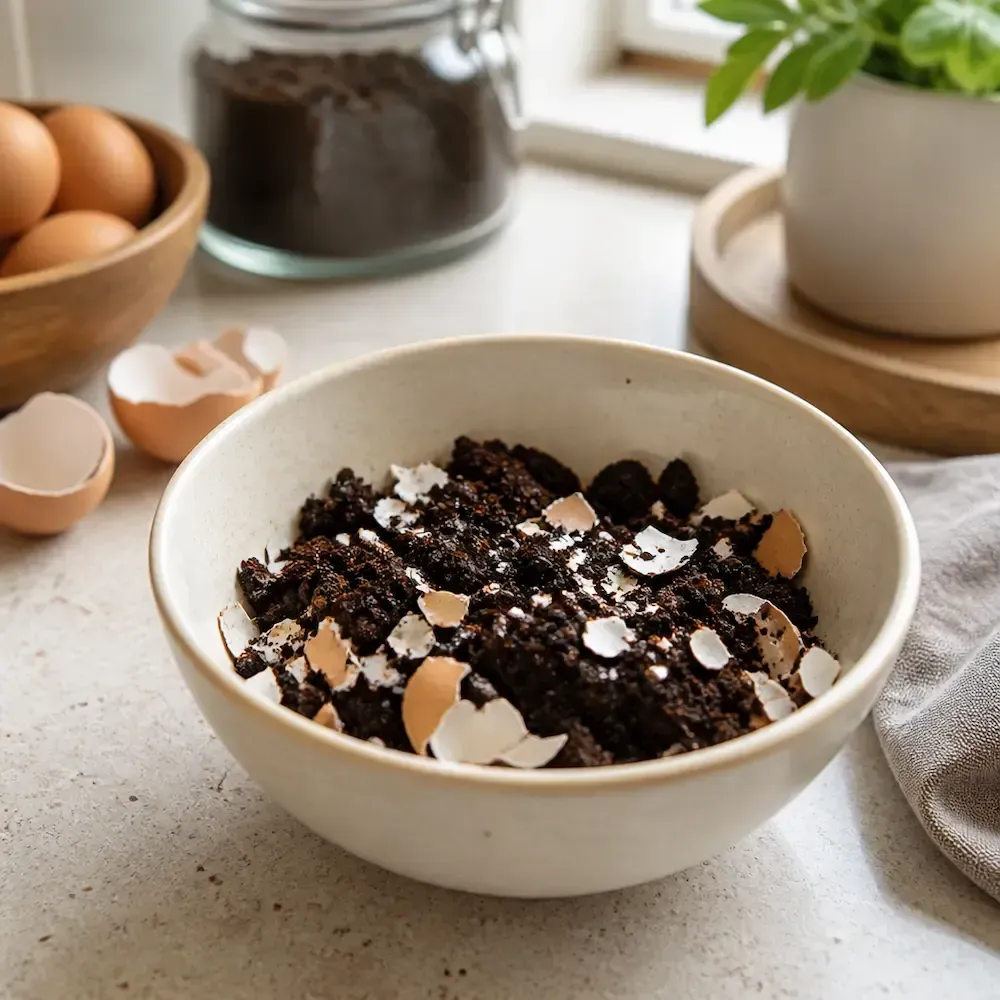
🍶Before you dump that bowl of coffee grounds and eggshells into your plants… read this.
🌱Why we save coffee grounds and eggshells for plants
A lot of us grew up watching someone—usually Mom or Grandma—keep a bowl of used coffee grounds and cracked eggshells on the counter “for the plants.”
The idea sounds perfect: free fertilizer, less waste, happier plants.
The truth is more nuanced: some tropicals love this kitchen habit, and some are quietly suffering because of it.
Understanding what’s in coffee grounds and eggshells—and how they change potting soil—helps you decide when they’re helpful and when they’re harmful.
🌱What coffee grounds actually do to soil
Used coffee grounds (the kind left after brewing) have a few key effects:
- Nutrients: They contain about 1–2% nitrogen, plus small amounts of phosphorus, potassium, magnesium, calcium, and trace minerals.
- pH: Fresh grounds are acidic, but used grounds are closer to neutral (around pH 6.2–6.8), so they don’t dramatically acidify soil long‑term.
- Organic matter: They add organic material that can improve soil structure and increase moisture retention—great for moisture‑loving plants, risky for plants that like to dry out.
- Risks: If applied in thick, wet layers, grounds can compact, form a crust, grow mold, attract fungus gnats, and contribute to root rot.
So coffee grounds are not a miracle fertilizer—they’re a mild, slow‑release amendment that can be good or bad depending on the plant and how you use them.
🌱What eggshells actually do to soil
Eggshells are made mostly of calcium carbonate—the same compound found in garden lime.
- Calcium: They add calcium, which plants use for strong cell walls and healthy leaf and root development.
- pH: As they break down, eggshells can slowly raise soil pH, nudging it more alkaline over time.
That means eggshells can be helpful for plants that don’t mind a slightly higher pH and benefit from extra calcium—but they can be a problem for acid‑loving tropicals, where too much alkalinity causes nutrient lockout and yellowing leaves.
🌱Tropicals that like coffee grounds
These plants generally appreciate organic matter, mild nutrients, and moisture‑retentive soil—as long as coffee grounds are used lightly and mixed into the potting mix or compost, not piled on top.
- Ferns (Boston, Maidenhair, Bird’s Nest)
- Why: They naturally grow in rich, humus‑heavy forest floors. A small amount of used coffee grounds in the mix can mimic that environment and support foliage growth.
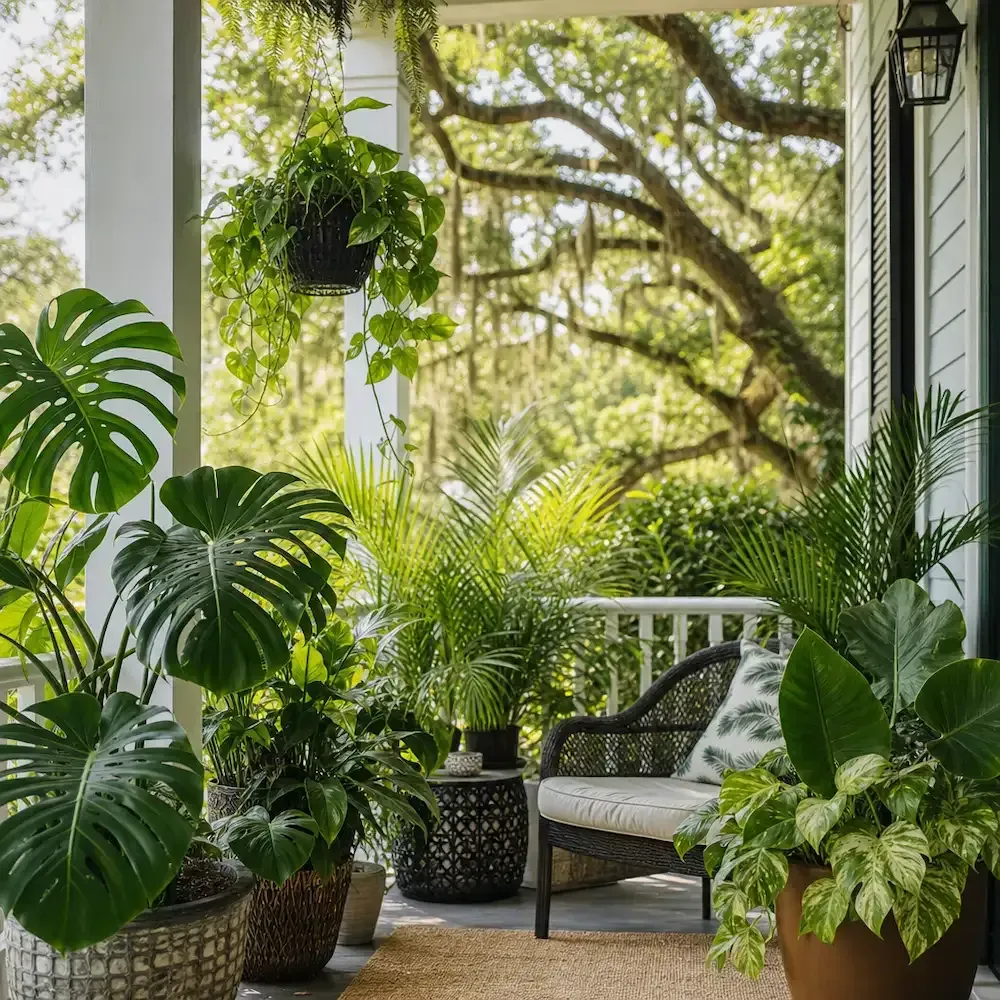
- Philodendrons & Monsteras
- Why: These aroids like airy, organic, slightly acidic to neutral soil. Lightly mixed‑in used grounds can add organic matter and a bit of nitrogen without drastically changing pH.
- Peace Lily (Spathiphyllum)
- Why: Peace lilies enjoy evenly moist, organic‑rich soil. In moderation, used grounds can improve moisture retention and add mild nutrients—but only if the pot has good drainage.
Rule of thumb:
If the tropical likes consistent moisture, organic‑rich soil, and slightly acidic to neutral pH, a small amount of used coffee grounds, mixed into the soil or compost, can be beneficial.
🌱Tropicals that hate coffee grounds
These plants are more likely to suffer from compaction, excess moisture, mold, or pH shifts when coffee grounds are used carelessly.
- Succulents & Cacti
- Why: They need fast‑draining, gritty soil and long dry periods. Coffee grounds increase moisture retention and can compact the surface—raising the risk of rot and fungus gnats.
- Snake Plant (Sansevieria) & ZZ Plant (Zamioculcas)
- Why: Both prefer to dry out between waterings and tolerate slightly higher pH. Extra moisture and organic buildup from coffee grounds can stress roots and invite rot.
- Seedlings of any tropical
- Why: Fine coffee particles can form a crust, reduce air and water movement, and high caffeine or sudden pH changes can stunt or kill young roots.
Rule of thumb:
If the plant likes to dry out, live in gritty soil, or is young and delicate, skip the coffee grounds.
🌱Tropicals that can benefit from eggshells
Because eggshells add calcium and gently nudge pH upward, they can be useful for some larger, structural tropicals—especially when finely crushed and added in moderation.
- Fiddle Leaf Fig (Ficus lyrata)
- Why: Calcium supports strong cell walls and can help prevent some leaf edge issues when overall nutrition is balanced.
- Bird of Paradise (Strelitzia)
- Why: A heavy‑feeding tropical that appreciates a full nutrient profile; calcium is part of that picture when combined with good fertilizer and soil.
- Large Monsteras
- Why: Similar to fiddle leaf figs, they can use calcium for strong stems and leaves, as long as pH doesn’t drift too high.
Important: Indoors, eggshells break down slowly. They should be washed, dried, finely crushed, and used sparingly—ideally mixed into potting soil or compost rather than left whole on the surface.
🌱Tropicals that hate eggshells
These plants lean toward acidic, humus‑rich conditions. Raising pH with eggshells can block iron and other micronutrients, leading to yellow leaves and poor growth.
- Gardenia (indoor)
- Why: Classic acid‑lover; alkaline shifts from calcium carbonate can cause chlorosis (yellow leaves with green veins).
- Calatheas & Prayer Plants (Maranta)
- Why: Sensitive to water quality and soil chemistry; they do best in slightly acidic, organic mixes. Extra alkalinity from eggshells can cause nutrient issues.
- Hydrangeas grown indoors (especially blue varieties)
- Why: Blue color depends on acidic soil and available aluminum; raising pH with eggshells pushes blooms toward pink and can reduce vigor.
Rule of thumb:
If the tropical is known to be acid‑loving or fussy about water and soil, avoid eggshells and stick to balanced, gentle fertilizers.
🌱How to safely use coffee grounds and eggshells (if you still want to)
If you or your customers love the idea of reusing kitchen scraps, here’s the safest way to do it:
- Use used, dried coffee grounds only
- Spread thinly or mix into compost/potting mix—never in thick, wet layers on top.
- Crush eggshells very finely
- Wash, dry, and grind them before mixing lightly into soil or compost so they break down faster and don’t just sit on the surface.
- Think “supplement,” not “fertilizer”
- Neither coffee grounds nor eggshells replace a balanced houseplant fertilizer. They’re small additions, not the main meal.
- Watch the plant, not the myth
- If leaves yellow, growth stalls, or soil stays soggy, stop using kitchen scraps and reset with fresh, appropriate potting mix.
If that bowl of coffee grounds and eggshells on the counter suddenly feels a little suspicious—that’s good.
It means you’re paying attention to what your plants actually need, not just what we’ve always done.
For tropicals that truly thrive in our South Louisiana climate—and real advice on what to feed them—visit Beau Monde Nursery Landscape & Florist in in Scott — just one block from Lafayette.
Bring your questions, bring your habits, and we’ll help you sort out which plants love your kitchen scraps and which ones quietly hate them.
Contact Us