

Will Robots Replace Landscapers? Here’s the Real Answer for Louisiana
Why Technology Will Never Replace Human Expertise in Landscaping
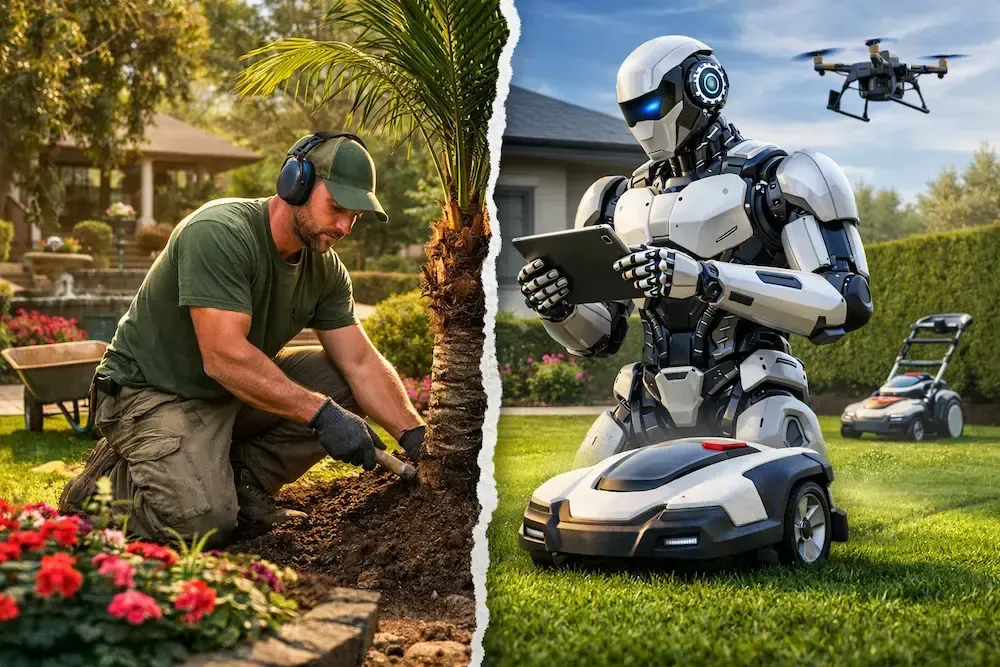
As AI and robotics continue to grow, many homeowners and business owners are asking the same question:
Will robots replace landscapers?
The short answer: No — but robots will replace certain tasks.
And the landscapers who adapt will become more valuable than ever.
Here’s what that means for Acadiana.
What Robots Can Replace
Robotics are improving fast, especially in the maintenance world. Over the next few years, we’ll see more automation in:
• Lawn mowing
• Edging
• Blowing
• Fertilizer applications
• Routine maintenance routes
• Simple scheduling and reminders
These are repetitive, predictable tasks — perfect for automation.
This means the “mow‑and‑go” style companies will feel the pressure first.
What Robots Cannot Replace
Landscaping in South Louisiana is too physical, too unpredictable, and too climate‑specific for robots to take over the skilled work.
Robots cannot:
• Diagnose drainage issues
• Correct soil problems
• Install large palms
• Build flower beds
• Handle Louisiana clay
• Manage irrigation repairs
• Choose plants for Zone 9 heat
• Adapt to storms, flooding, or root rot
• Communicate with customers
• Make on‑site decisions
Landscaping requires experience, judgment, and hands‑on skill — things no robot can replicate.
Why Skilled Landscapers Are More Important Than Ever
As basic tasks become automated, the value shifts toward:
• Licensed contractors
• Skilled installers
• Drainage specialists
• Hardscape professionals
• Nurseries and plant experts
• Landscape designers
These roles require human expertise, not just labor.
Robots don’t replace landscapers — they replace the least skilled parts of landscaping.
The Future: Robots and Landscapers Working Together
The companies that thrive will be the ones who use technology to:
• Speed up estimates
• Improve design accuracy
• Plan projects more efficiently
• Communicate with customers
• Manage schedules
• Reduce labor costs
• Deliver better results
AI and robotics won’t eliminate landscapers — they’ll empower the ones who adapt.
How Louisiana’s Climate Makes Automation Harder
South Louisiana is one of the most challenging regions in the country for robotic landscaping because of:
• Heavy clay soil
• Frequent rain
• High humidity
• Rapid plant growth
• Storm debris
• Heat‑stressed lawns
• Drainage issues
• Uneven terrain
Robots struggle with:
• Mud
• Soft ground
• Ruts
• Standing water
• Thick St. Augustine grass
• Debris from storms or wind
A robot can mow a perfect suburban lawn in Arizona.
It cannot navigate a soggy backyard in Lafayette after a summer thunderstorm.
This climate alone guarantees that human landscapers remain essential.
The Human Element: What Customers Still Want
Even as technology grows, homeowners still value:
• Personal recommendations
• Face‑to‑face communication
• Trust and reliability
• Custom design ideas
• Problem‑solving on site
• A crew they know and recognize
Landscaping is not just a service — it’s a relationship.
Robots can’t build that.
Frequently Asked Questions
Will robots completely replace landscapers?
No. Robots will replace tasks, not landscapers. Automation will handle repetitive work like mowing and edging, but skilled landscaping — design, installation, drainage, plant selection, and problem‑solving — will always require human expertise.
Are robotic lawn mowers reliable in Louisiana?
Robotic mowers work well on flat, dry, predictable lawns.
But Louisiana’s climate creates challenges:
• Heavy clay soil
• Frequent rain
• Standing water
• Thick St. Augustine grass
• Uneven terrain
• Storm debris
These conditions make full automation difficult without human oversight.
Can robots install plants, palms, or flower beds?
No. Robots cannot dig proper holes, amend soil, handle root balls, or adjust for real‑time conditions.
Planting — especially palms and large material — requires human strength, judgment, and experience.
Will robotic landscaping reduce jobs?
It will reduce low‑skill, repetitive labor, but it will increase demand for:
• Skilled installers
• Drainage experts
• Hardscape professionals
• Landscape designers
• Nursery and plant specialists
The industry shifts toward higher‑skill, higher‑value work.
Are robots good for commercial properties?
Yes — in some cases.
Large, open, predictable areas (like business parks or athletic fields) are ideal for robotic mowing.
But commercial properties with slopes, obstacles, or drainage issues still require human crews.
How will AI affect landscaping companies?
AI will help landscapers:
• Create faster estimates
• Improve design accuracy
• Communicate with customers
• Plan projects
• Manage schedules
• Reduce labor costs
AI becomes a tool — not a replacement.
Should homeowners switch to robotic lawn care?
Robotic mowers are great for:
• Small, flat yards
• Homeowners who want daily trimming
• People who prefer quiet, low‑maintenance mowing
They are not ideal for:
• Wet or uneven yards
• Yards with drainage issues
• Thick St. Augustine lawns
• Yards with pets, toys, or debris
• Properties with slopes or obstacles
Most Louisiana yards still need human care.
What landscaping work will always require humans?
• Landscape design
• Palm installation
• Drainage correction
• Irrigation repairs
• Soil improvement
• Bed building
• Tree planting
• Storm cleanup
• Hardscaping
• Customer communication
These tasks require judgment, creativity, and physical skill.
Pros & Cons of Robotic Lawn Care
Pros of Robotic Lawn Care
• Quiet Operation
Robotic mowers run much quieter than traditional gas mowers, making them ideal for neighborhoods with noise restrictions or homeowners who prefer low‑noise maintenance.
• Consistent Cutting
Robots trim a little bit every day, which keeps the lawn looking freshly cut and reduces stress on the grass.
• Low Daily Maintenance
Once installed, robotic mowers can run on a schedule without constant supervision. They return to their charging station automatically.
• Energy Efficient
Most robotic mowers are electric, using far less energy than gas-powered equipment.
• Good for Small, Simple Yards
Flat, open yards with few obstacles are perfect for robotic mowing.
Cons of Robotic Lawn Care
• Not Ideal for Louisiana Terrain
Heavy clay soil, uneven yards, thick St. Augustine grass, and frequent rain make it difficult for robots to operate reliably.
• Struggles With Debris
Sticks, pine cones, palm fronds, toys, and storm debris can stop or damage robotic mowers.
• Limited to Mowing Only
Robots cannot edge, trim, weed, mulch, plant, or handle any real landscaping tasks.
• High Upfront Cost
Robotic mowers can cost more than a year of professional lawn service — and still require human oversight.
• Poor Performance on Slopes or Wet Ground
Louisiana’s soft, saturated soil after rain can cause robots to get stuck or leave ruts.
• No Problem‑Solving Ability
Robots cannot diagnose drainage issues, fix irrigation, or adjust to unexpected conditions.
Robotic Mowing vs. Professional Lawn Care
Comparison Table Performance
• Robotic Mowing: Good for small, flat, predictable lawns.
• Professional Lawn Care: Handles all lawn types, including uneven, wet, or clay-heavy Louisiana yards.
Cost
• Robotic Mowing: High upfront cost; low ongoing cost.
• Professional Lawn Care: No equipment cost; pay per visit or monthly.
Reliability
• Robotic Mowing: Can get stuck, clogged, or confused by debris.
• Professional Lawn Care: Reliable in all conditions, including after storms.
Climate Suitability
• Robotic Mowing: Struggles with Louisiana rain, mud, and thick St. Augustine grass.
• Professional Lawn Care: Built for local climate challenges.
Maintenance Needs
• Robotic Mowing: Requires setup, boundary wires, cleaning, and occasional repairs.
• Professional Lawn Care: Zero homeowner maintenance — crew handles everything.
Capabilities
• Robotic Mowing: Mows only. No edging, trimming, weeding, planting, or cleanup.
• Professional Lawn Care: Full-service care including edging, trimming, bed work, planting, drainage, and more.
Problem‑Solving
• Robotic Mowing: Cannot diagnose issues or adapt to unexpected conditions.
• Professional Lawn Care: Identifies problems early and adjusts on the spot.
Overall Value
• Robotic Mowing: Great for simple yards with minimal needs.
• Professional Lawn Care: Best for homeowners who want complete, reliable, year‑round care.
Bottom Line
Robots will replace tasks, not landscapers.
They’ll handle the repetitive work.
Humans will handle the expertise, creativity, and problem‑solving.
At Beau Monde, we embrace new tools — but we know one thing will never change:
Great landscaping still requires great people.
Ready to start your next landscape project? Contact Beau Monde Nursery Landscape & Florist for expert design, installation, and maintenance across Lafayette and Acadiana.
Contact Us