Good Eggs vs. Bad Eggs: What Those Tiny Dots on Your Leaves Really Mean in South Louisiana

Rochelle Carriere • May 29, 2026

Learn which insect eggs protect your garden — and which ones destroy it.

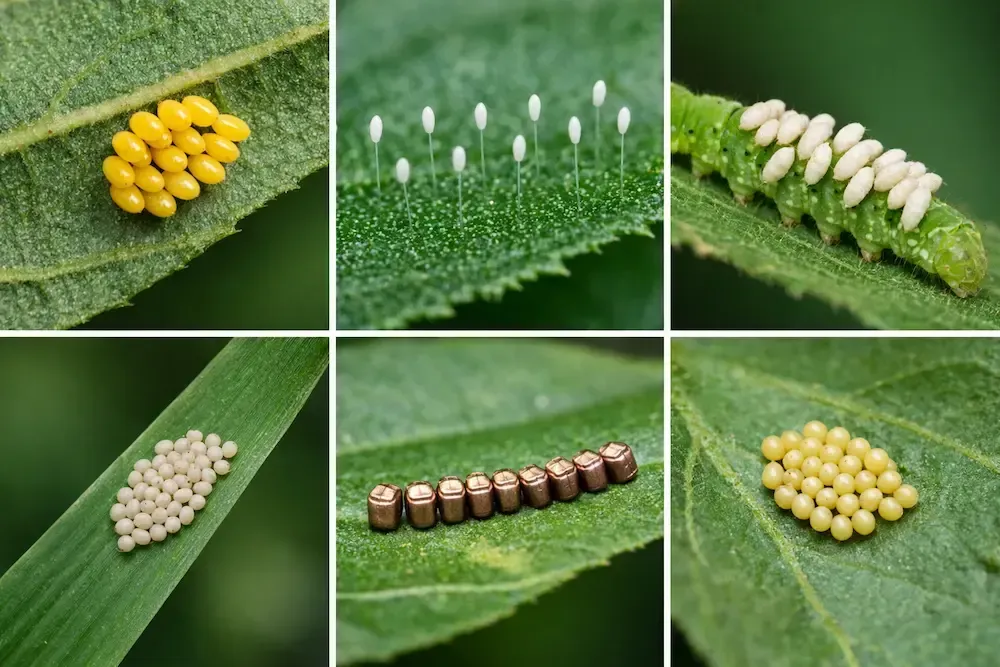
If you’ve ever walked through your yard and spotted tiny dots, clusters, or strange little shapes stuck to your leaves, you’re not alone. In South Louisiana’s warm climate, insects are constantly laying eggs on foliage — and while some hatch into beneficial predators that protect your plants, others turn into pests that can damage lawns, shrubs, and gardens. Knowing the difference helps you take action early and keep your landscape healthy without harming the good guys.


🟢 Good Eggs — Beneficial Insects You Want to Keep


🔴 Bad Eggs — Pests That Damage Foliage and Lawns


🟡 Neutral Eggs — Depends on Your Garden Goals


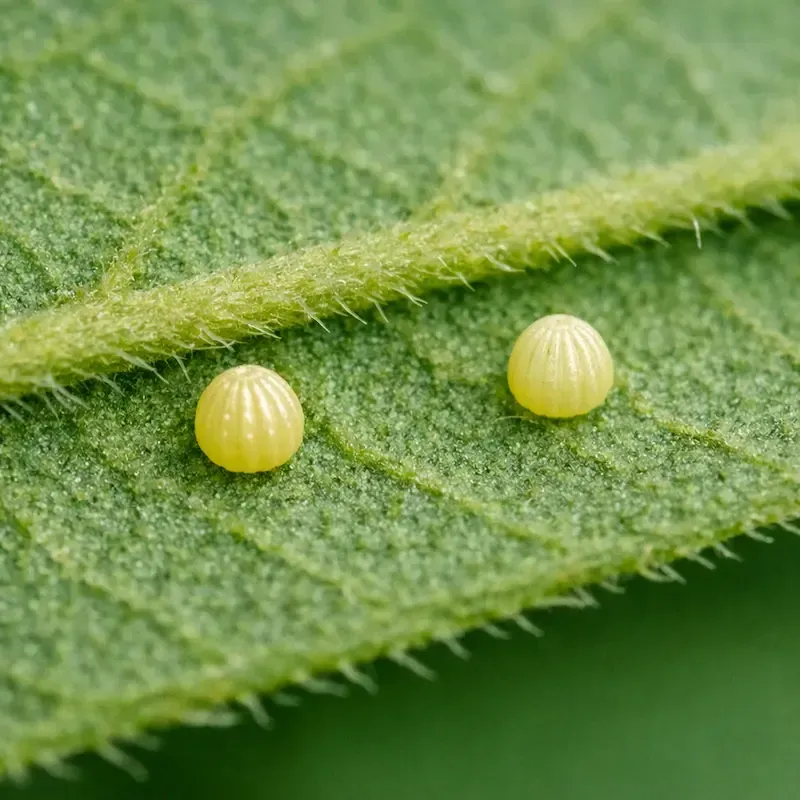
Close‑up of two pale yellow butterfly eggs with ribbed texture on the underside of a green leaf.

Butterfly Eggs 


Butterfly Eggs are usually laid singly and appear as tiny white or yellow dots.


🟢Good: If you’re growing a pollinator garden or host plants like milkweed or parsley.


🔴Bad: If they’re on vegetables like cabbage, kale, or broccoli (cabbageworms).


🟡Keep or remove depending on your goals.
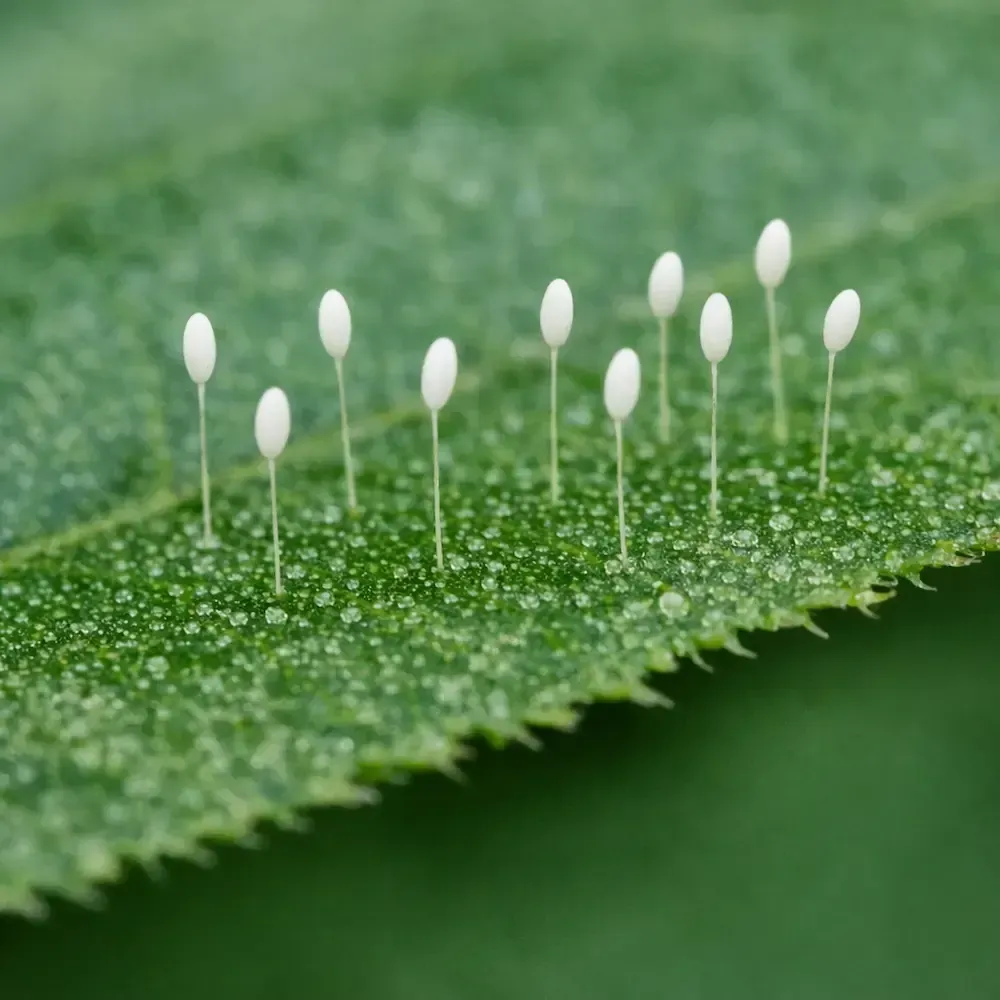
Close‑up of white lacewing eggs on thin stalks attached to a green leaf.

Lacewing Eggs


Lacewing eggs look unusual — tiny white dots perched on thin, hair-like stalks. These stalks keep the eggs separated so the larvae don’t eat each other when they hatch. Lacewing larvae are aggressive predators that wipe out aphids and other soft-bodied pests.


🟢 These are extremely beneficial. Keep them.

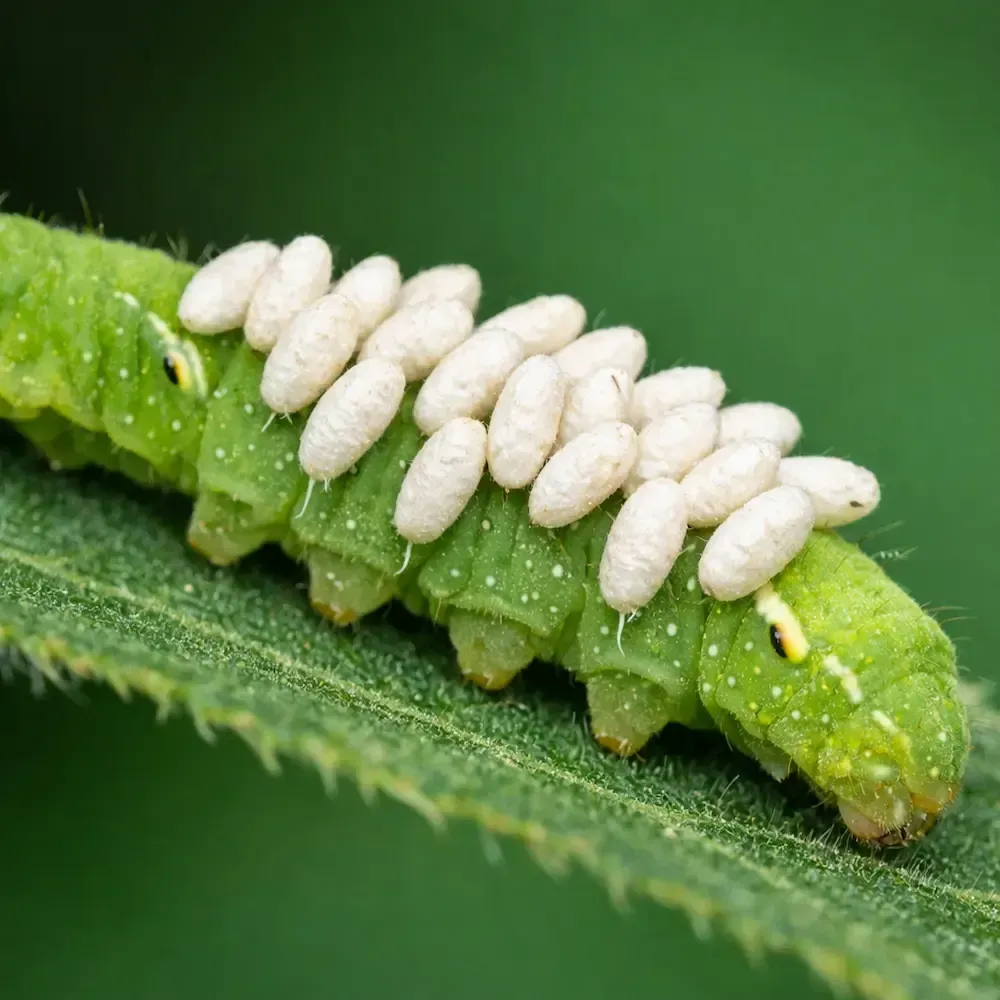
Close‑up of white parasitic wasp cocoons attached to the back of a green caterpillar on a leaf.

Parasitic Wasp Eggs


These tiny wasps don’t sting people — they attack pests. You’ll often see their white cocoons attached to caterpillars like tomato hornworms or bagworms. The wasp larvae feed on the pest from the inside, stopping the damage before it spreads.


🟢 If you see a caterpillar covered in white cocoons, leave it. Nature is doing the work for you.


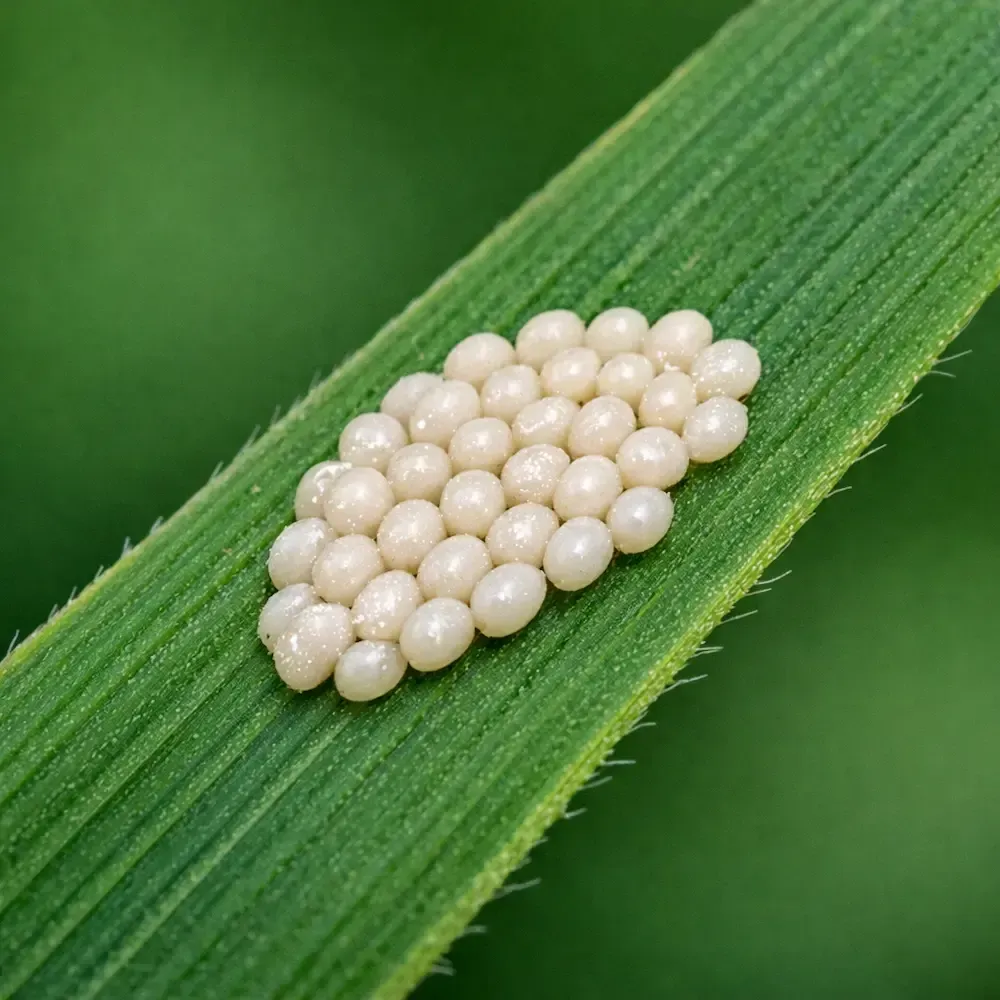
Close‑up of off‑white armyworm and sod webworm egg clusters attached to a green blade of grass.

Armyworm & Sod Webworm Eggs


These pests lay small, off‑white egg clusters on grass blades, fences, or siding. Once they hatch, the larvae can destroy St. Augustine and Bermuda lawns quickly — especially during warm, wet stretches.


🔴Remove these immediately and treat with bifenthrin or BT depending on the stage.

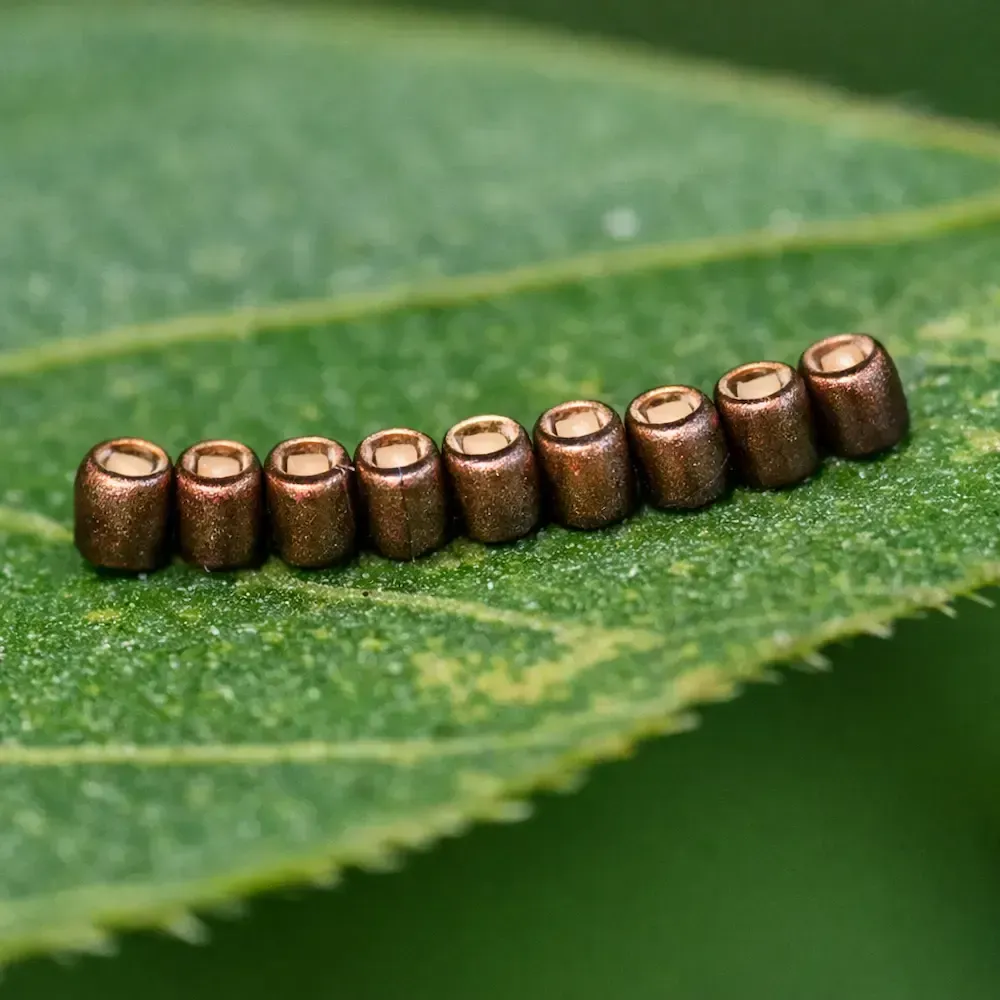
Close‑up of metallic bronze stink bug and leaf‑footed bug eggs arranged in a neat row on a green leaf.

Stink Bug & Leaf‑Footed Bug Eggs


These eggs are easy to recognize bronze, barrel-shaped, and arranged in perfect rows. They’re commonly found on tomatoes, peppers, citrus, and ornamentals. When they hatch, the nymphs pierce fruit and foliage, causing deformities and discoloration.


🔴 Remove the entire leaf or crush the eggs.


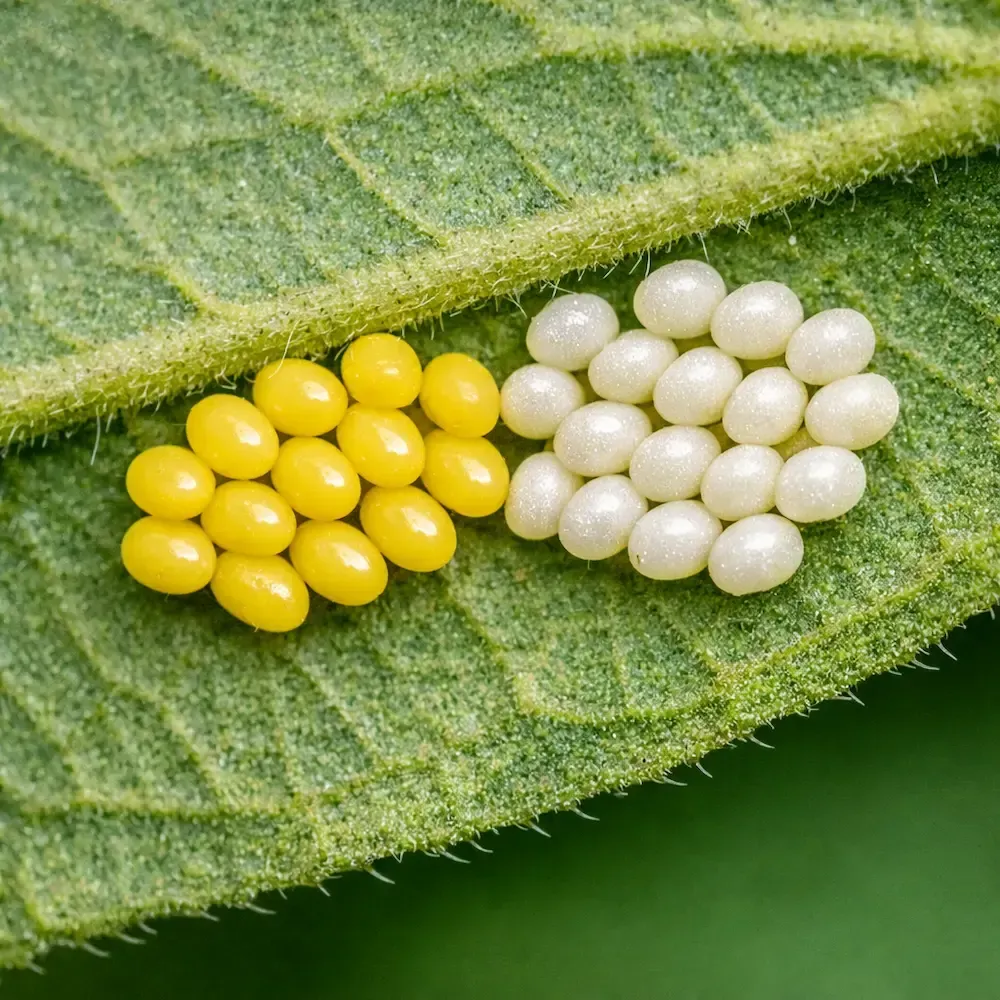
Close‑up of pale yellow and off‑white caterpillar and moth egg clusters attached to the underside of a green leaf.

Caterpillar & Moth Eggs


Many moth species lay pale yellow or white clusters on the undersides of leaves. These hatch into leaf‑eating caterpillars that can strip foliage quickly.


🔴 Remove clusters and use BT if you notice chewing damage.


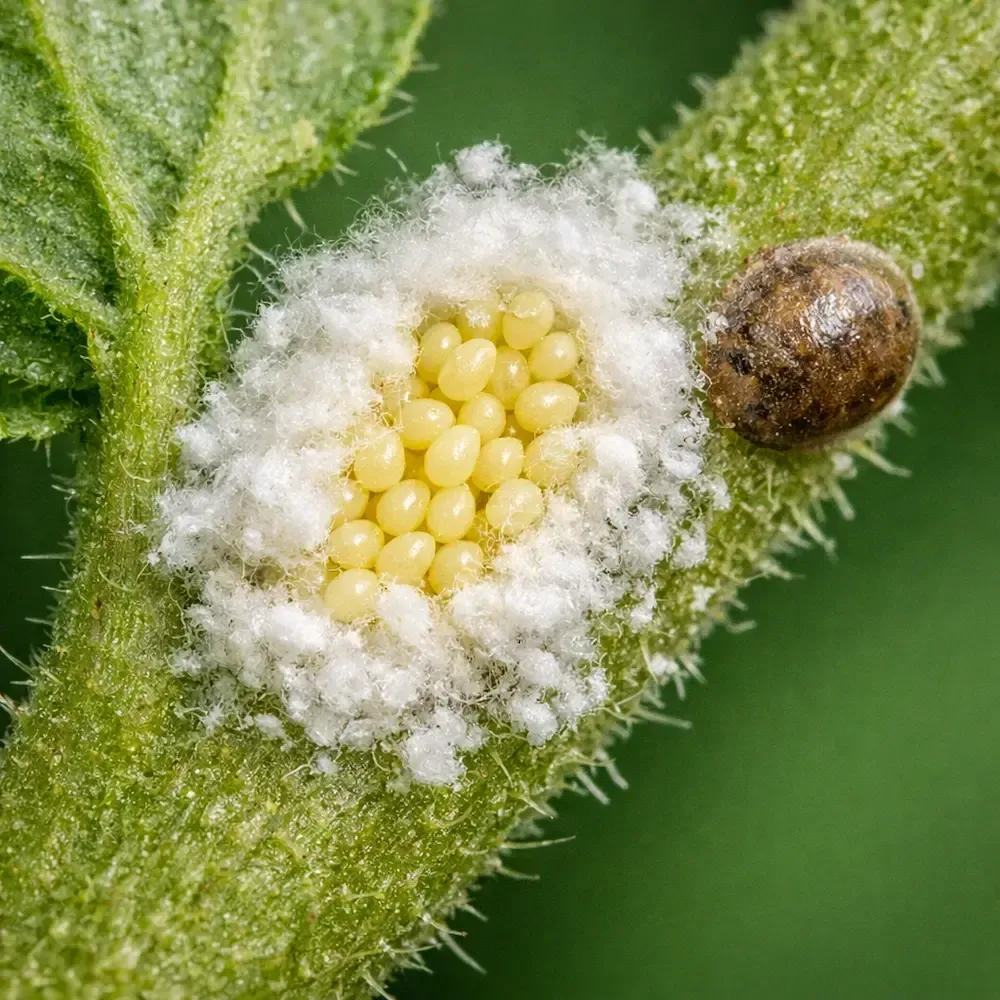
Close‑up of pale yellow scale insect eggs nestled in a white cottony mass on a green plant stem beside a brown adult scale.

Scale Eggs


Scale insects are tiny sap‑sucking pests that hide beneath waxy shells or cottony coverings on stems and leaves. Females lay eggs inside these protective layers, forming fuzzy white masses that cling to plant surfaces. As the eggs hatch, young scales begin feeding immediately, draining plant juices and leaving behind sticky honeydew that attracts sooty mold.


🔴Scale = Bad


The most effective approach is using horticultural oil or neem oil, which coats the insects and suffocates both adults and eggs. 

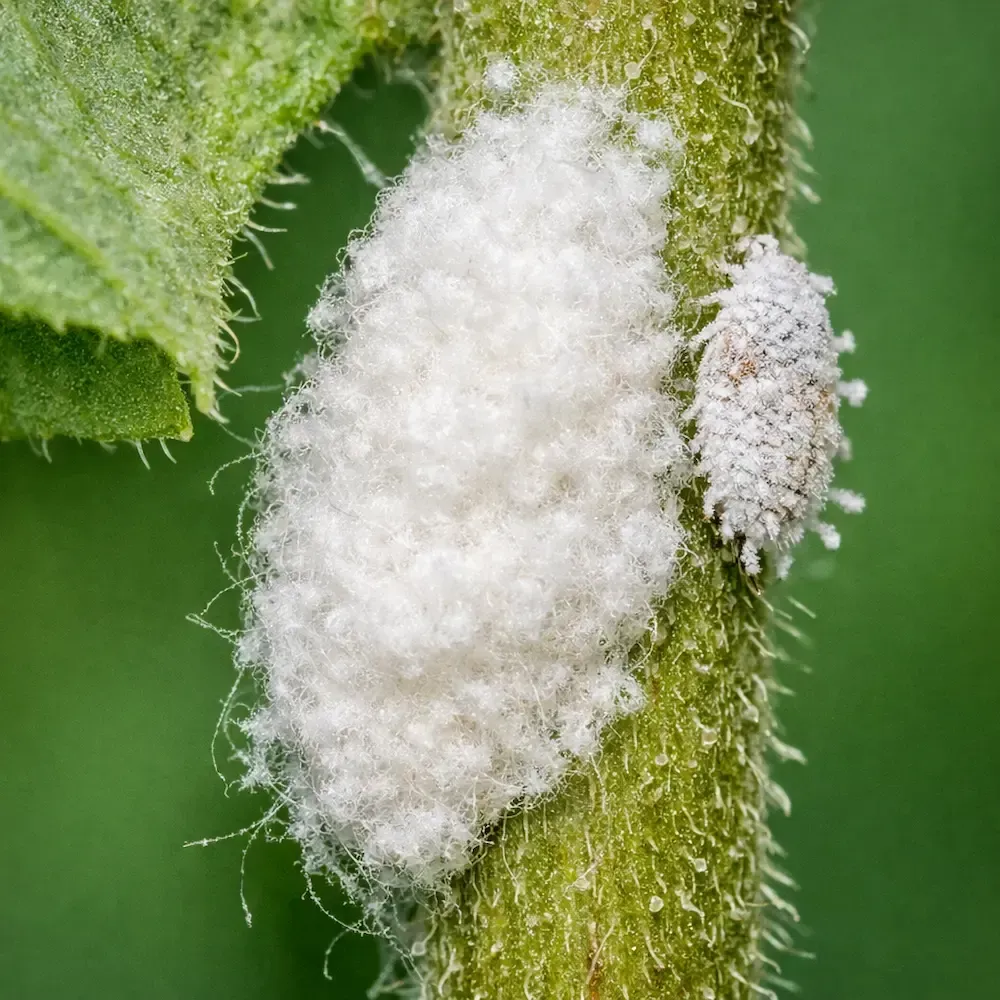
Close‑up of white cottony mealybug egg sac attached to a green plant stem beside a small oval adult mealybug.

Mealybugs


Mealybugs are soft‑bodied, sap‑sucking insects that hide in leaf joints and stems, leaving behind fuzzy white egg sacs that look like bits of cotton. They weaken plants by draining nutrients and coating surfaces with sticky honeydew that attracts sooty mold.

🔴= Mealybugs Bad


🧿 How to Treat

Spray affected areas with neem oil or horticultural oil, making sure to coat stems and leaf undersides. For heavy infestations, use a systemic insecticide that moves through the plant’s tissues. You can also wipe small clusters off with a cotton swab dipped in rubbing alcohol to kill eggs and adults on contact. Repeat treatments weekly until no new mealybugs appear.


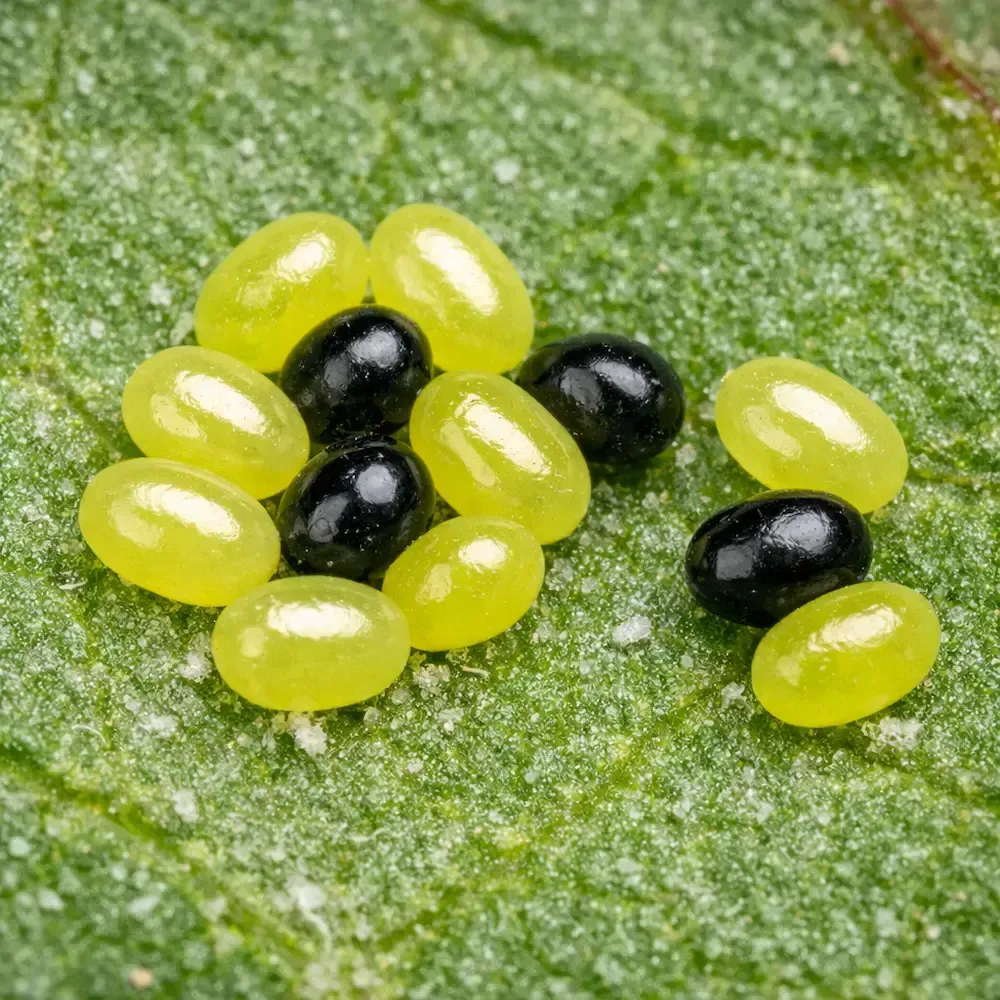
Close‑up of glossy yellow‑green and black aphid eggs clustered on a textured green leaf surface.

Aphids are soft‑bodied, pear‑shaped insects that cluster on new growth and the undersides of leaves. Their eggs are tiny, glossy, and oval — ranging from yellow‑green to shiny black depending on the species and season. Once hatched, aphids multiply rapidly, sucking sap from tender stems and leaves, which causes curling, yellowing, and sticky honeydew buildup that attracts ants and mold.


🔴BAD — aphids are destructive sap‑sucking pests that weaken plants and spread quickly.


🧿 How to Treat

Spray plants with insecticidal soap or neem oil, focusing on leaf undersides and new growth. For persistent infestations, use horticultural oil or introduce ladybugs and lacewings to control populations naturally. A strong stream of water can also knock aphids off plants. Repeat treatments every few days until no new colonies appear.

💬 Final Takeaway

Not every egg on a leaf is a problem. Some are signs of a healthy, balanced garden full of natural predators. Others can cause serious damage if left alone. When in doubt, snap a photo and send it to us — we’ll help you identify it before it hatches.


🌿 Ready for Help Identifying or Treating Pests?

  Call Now for a Free Quote — or stop by Beau Monde Nursery with a leaf sample and we’ll take a look.

Call for a Free Quote

Contact Us

About the Author

Rochelle Carriere is a horticulture and landscape professional serving Lafayette, Louisiana and the Acadiana region. She holds multiple Louisiana state credentials, including:

  • Louisiana Licensed Horticulturist
  • Louisiana Licensed Landscape Contractor
  • Louisiana Licensed Grower
  • Licensed Florist

Rochelle specializes in practical, climate‑specific guidance for Zone 9 landscapes. Her work includes plant selection, landscape planning, lawn care, and hands‑on problem solving for homeowners and businesses throughout Lafayette.

On this blog, she shares trustworthy, experience‑based advice to help Acadiana residents make confident decisions about their landscapes.

Connect with Rochelle on LinkedIn

Louisiana home with blooming crape myrtle trees and a mature oak tree in the front yard.
By Rochelle Carriere May 23, 2026
Crape myrtle care guide for Lafayette, LA. Learn pruning, watering, pest control, bark scale treatment, powdery mildew fixes, and Zone 9 planting tips.
Thai constellation monstera care guide cover with green variegated leaves and bold title text
By Rochelle Carriere May 22, 2026
Learn how to care for a Thai Constellation Monstera. Light, watering, soil, and humidity tips to keep this rare, variegated plant thriving indoors.
Colorful flower garden with pink, orange, and purple blooms, palm trees, and a stone border.
By Rochelle Carriere May 21, 2026
Learn what to plant in South Louisiana's heat.
Cluster of pink and yellow plumeria flowers with green leaves
By Rochelle Carriere May 19, 2026
Learn how to identify, treat, and prevent plumeria rust in South Louisiana. Spot symptoms early and protect your plumeria with simple, effective care tips.
Landscaped front yard with trimmed shrubs, flowers, and a freshly cut tree trunk near the curb
By Rochelle Carriere May 17, 2026
Lafayette • Scott • Broussard • Youngsville • Acadiana (Zone 9)
Indoor house palm on table with plant care products and watering tools, with “Indoor House Palm Care” text
By Rochelle Carriere May 16, 2026
Learn why house palms need heavy feeding in spring & summer. Use Osmocote & fish emulsion for healthy growth. Contact us for tips!
Hummingbird and butterflies in a pollinator garden
By Rochelle Carriere May 15, 2026
Learn to attract butterflies, bees & hummingbirds to your garden with native plants & eco-friendly tips. Create a pollinator haven today!
Elegant Lafayette, LA wedding and event setup featuring live plant rentals with palms, ferns, lilies
By Rochelle Carriere May 12, 2026
Explore live plant rentals for weddings in Lafayette. Enhance your décor sustainably & affordably with Beau Monde Nursery Landscape & Florist.
Colorful garden with pink, purple, yellow flowers, lush greenery, and a stone path under tall trees
By Rochelle Carriere May 12, 2026
Learn about low-maintenance native plants like Louisiana Iris & Yaupon Holly for your landscape. Contact us for expert landscaping services!
Tropical backyard pool with palm trees, rock waterfall, and lush landscaping under a blue sky
By Rochelle Carriere May 11, 2026
Learn why palms are perfect for South Louisiana homes. Enhance your landscape with low-maintenance palms. Contact Beau Monde for expert installation!